Most visitors pass Cetara without stopping. It sits at the eastern end of the Amalfi Coast, smaller and plainer than Positano, with none of the postcard drama that pulls the crowds west. What it has instead is a working fishing fleet and a four-hundred-year-old relationship with the sea that most of the coast has traded away for tourism. Cetara still fishes, and from that fishing comes one of the most remarkable ingredients in Italian cooking.
That ingredient is colatura di alici, an amber anchovy extract used a few drops at a time, and it carries a lineage that reaches back to the Roman Empire. This is the story of the village, the sauce, and the inheritance that connects them, one of the genuinely distinctive things on a coast better known for its views than its plate.
A working village on a coast that stopped working
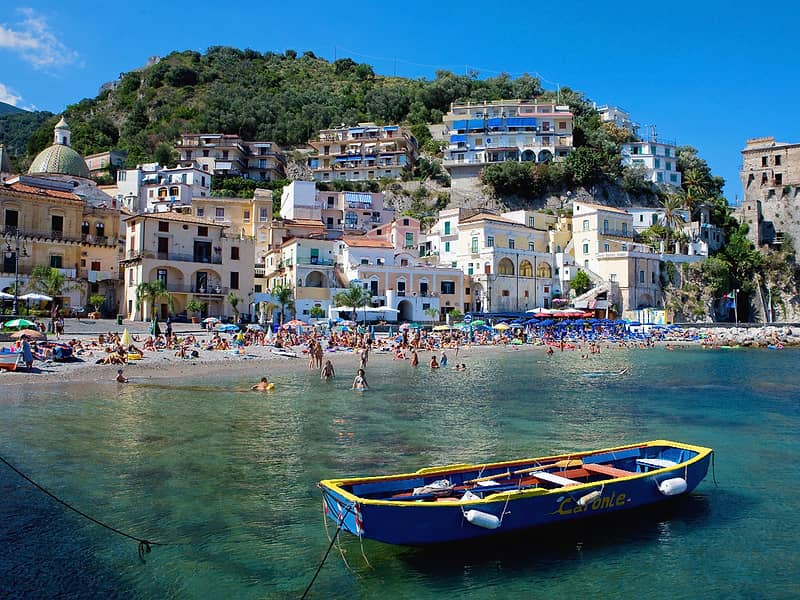
The Amalfi Coast was a fishing and trading economy long before it was a holiday one. Over the last century most of its towns turned to tourism, and the boats largely disappeared. Cetara is the exception. It still operates one of the most significant anchovy and tuna fishing fleets in the area, and fishing remains a real part of the local economy rather than a heritage display for visitors.
That difference is why Cetara feels unlike its neighbors. The harbor is a place of work, not a marina of pleasure boats. The town’s name may itself carry the memory of that vocation: one reading traces it to the Latin cetaria, meaning a tuna fishery, though village etymologies are uncertain and this should be taken as a likely origin rather than a settled fact. Either way, Cetara has been defined by the sea for as long as it has existed.
What colatura di alici actually is
Colatura di alici is a clear, amber liquid drawn from anchovies matured under salt. It is not a sauce you pour, it is an extract you dose in drops, intensely savory, deeply concentrated, closer to a seasoning than a condiment. A little transforms a plate of pasta or a simple vegetable; too much overwhelms everything. It is the essence of the anchovy, reduced to its purest and most powerful form.
What it is not is fishy in the crude sense the description might suggest. Made well, it is round and savory rather than sharp, the marine equivalent of what aged parmesan does for umami. This is the quality that has taken it from a local Christmas tradition to the tables of some of the best restaurants in Italy and beyond.
The inheritance from Roman garum
Colatura’s lineage reaches back to garum, the fermented fish sauce that flavored food across the ancient Mediterranean and was prized in Roman kitchens. Garum was produced throughout the Roman world, Campania included, and its memory never fully disappeared from the region’s cooking. Colatura is widely regarded as its closest surviving descendant, and there is serious scholarship examining that continuity rather than merely asserting it.
It is worth being precise about the relationship, because it is often overstated. Colatura is the heir of garum, not the same thing. Roman garum was typically made from fish innards and often included wine, vinegar, and herbs, producing something more complex and variable. Colatura is simpler and cleaner: anchovies, salt, and time, and nothing else. The technique is a direct inheritance; the product has been refined over centuries into something distinctly its own. Calling it “Roman garum” is a romantic shorthand rather than a literal truth.
How it is made
The method is codified and demanding. Anchovies are caught in the waters off this stretch of coast in spring and early summer, then headed, gutted, and layered with sea salt within hours of landing. They are packed into small wooden barrels of chestnut or oak, known locally as terzigni, alternating anchovies and salt, and left to mature under a weight for months.
As the fish mature, a liquid forms. In the traditional final step it is drawn off, poured back over the anchovies to gather flavor, and finally filtered through linen cloths to produce the clear amber extract. The colatura is ready by December, and tradition holds that the first taste comes on Christmas Eve, dressed over linguine in the homes of Cetara. What was once a purely local ritual is now a product sought far beyond the village.
A protected product with a documented pedigree
Cetara’s colatura is not folklore dressed up for tourists. It carries formal recognition that documents its authenticity. It has been a Slow Food presidium since 2003, and in October 2020 it received Protected Designation of Origin status from the European Union, the first Italian fishing product to earn a PDO. The designation ties the name to a specific method and a specific stretch of sea, and protects it from imitation.
The practical meaning for a visitor is simple. A bottle labeled Colatura di Alici di Cetara DOP is made to a defined standard, in the defined place, by the defined method. It is one of the few culinary souvenirs of the Amalfi Coast that carries a genuine guarantee behind it, rather than trading on a famous name alone.
Seeing Cetara from the water
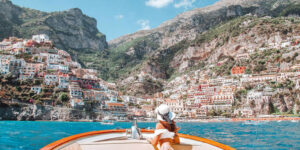
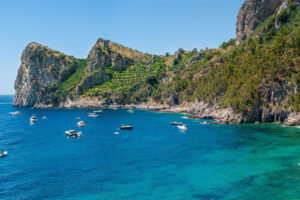
Cetara sits toward the Salerno end of the Amalfi Coast, past the better-known towns, and it is one of the places that rewards arriving by sea. From the water you see it as it was meant to be seen, a working harbor beneath a watchtower, without the road and the parking that frame the land approach. It is a quieter, more honest stretch of coast than the celebrated center, and it makes a natural point on a longer day along the shoreline.
A day on the water along this coast can take in the famous towns and the working ones alike, and Cetara is worth including precisely because it is not like the others. Our Amalfi and Positano itinerary covers the central stretch of the coast, and our fuller guide to the Amalfi Coast by boat sets out how a day on the water fits together. For the history written into the shoreline itself, our piece on the coastal watchtowers covers the towers that still stand over villages like this one.
Frequently asked questions
What is colatura di alici?
It is a clear, amber liquid extracted from anchovies matured under salt in the village of Cetara, on the Amalfi Coast. Intensely savory and used only in drops, it works as a seasoning rather than a sauce, and is considered the closest surviving descendant of ancient Roman garum.
Is colatura the same as Roman garum?
Not exactly. Colatura is the heir of garum and uses the same basic technique, but the two differ. Roman garum was often made from fish innards with added wine, vinegar, and herbs, while colatura is made from anchovies, salt, and time alone, producing a cleaner and simpler result.
Is Cetara’s colatura a protected product?
Yes. It has been a Slow Food presidium since 2003, and in October 2020 it received Protected Designation of Origin (PDO) status from the European Union, the first Italian fishing product to do so. The designation ties the name to a defined method and area.
How is colatura used in cooking?
A few drops at a time. It is traditionally used to dress linguine or spaghetti with garlic and oil, and can lift simple vegetables or other dishes. Because it is highly concentrated, a little goes a long way, and too much overwhelms the plate.
Is Cetara worth visiting on the Amalfi Coast?
For travelers interested in food and in a working fishing village rather than a resort town, yes. Cetara sits toward the Salerno end of the coast and is quieter than the central towns. It is particularly rewarding seen from the water, as part of a longer day along the shoreline.