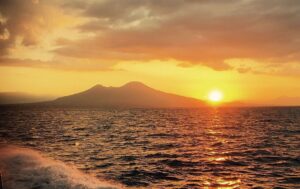
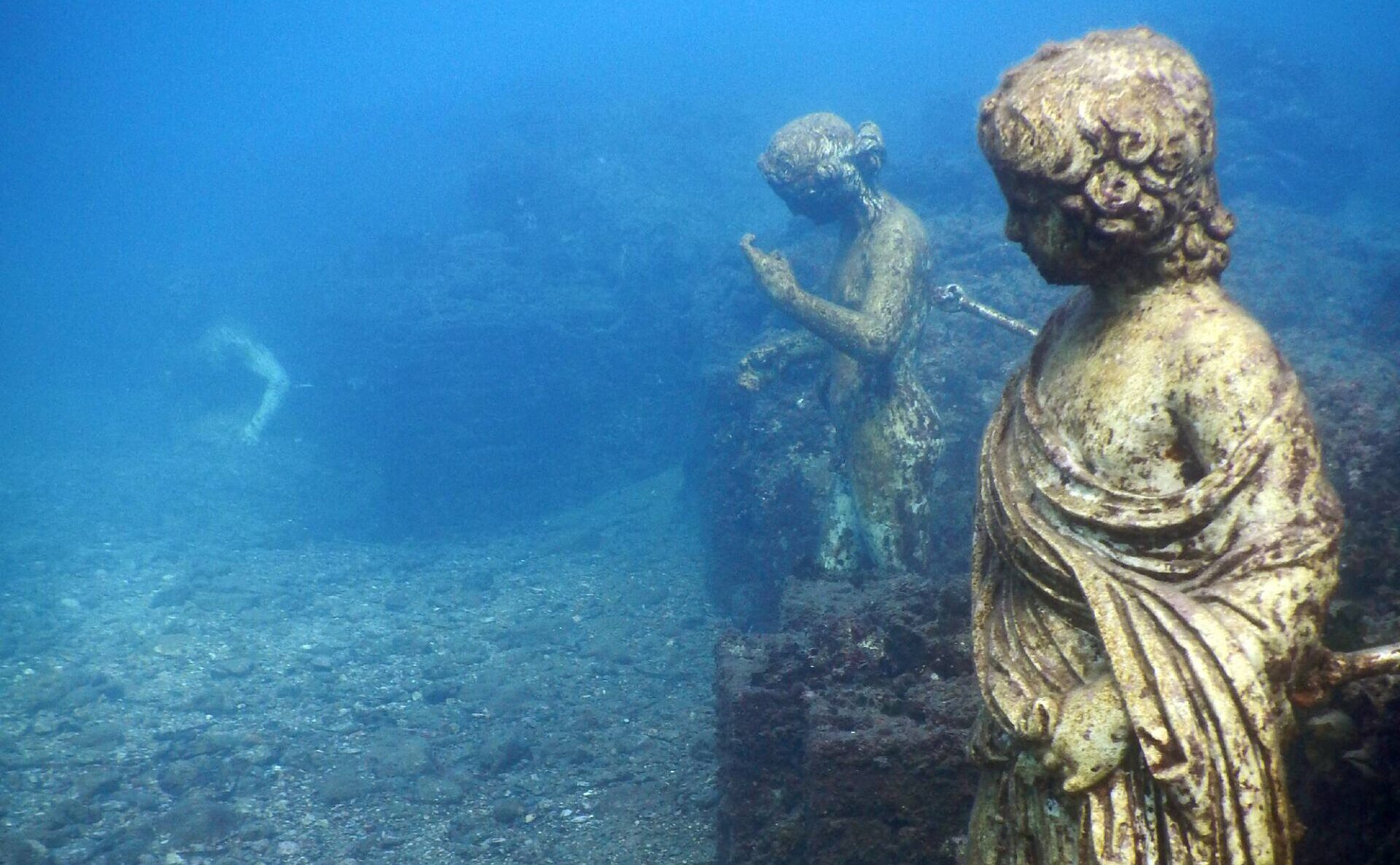
On a calm day in the Bay of Naples, the water off the little town of Baia looks like any other stretch of Mediterranean coast. Look a little closer, though, and shapes begin to surface a few feet below you: the line of a road, the threshold of a doorway, the pale gleam of marble. This is the sunken city of Baiae, a Roman resort that the sea slowly swallowed, and one of the most extraordinary places most travelers have never heard of.
The Las Vegas of the Roman Empire
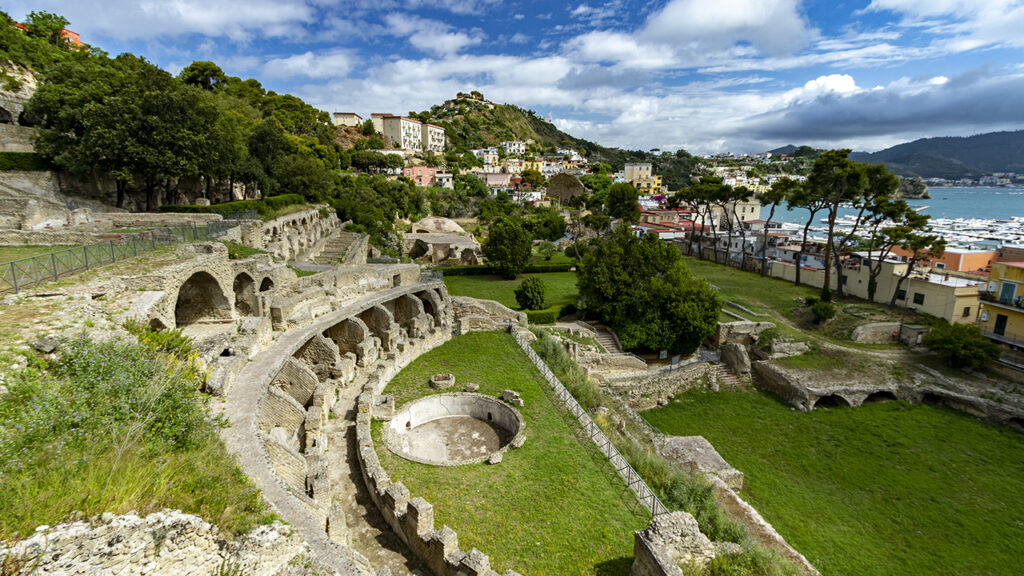
Two thousand years ago, Baiae (pronounced roughly “bye-eye”) was where the most powerful people in Rome came to escape Rome. Built along a volcanic coast west of Naples, it was famous for its natural hot springs, and the Roman elite built lavish seaside villas here to enjoy them. Caesar, Cicero, Pompey, and later Nero are all associated with the town, drawn by the warm mineral waters, the mild climate, and the chance to set public life aside for a while.
That reputation had another side. Ancient writers describe Baiae as a place of pleasure and excess, a coastline of heated pools, banquet halls, and parties that spilled onto boats in the bay. It is often called the Las Vegas of the Roman Empire, and the nickname fits: this was where the rules of the capital relaxed. The town stayed fashionable for centuries. The emperor Hadrian is recorded to have died at Baiae in the year 138.
How an entire city slipped beneath the sea
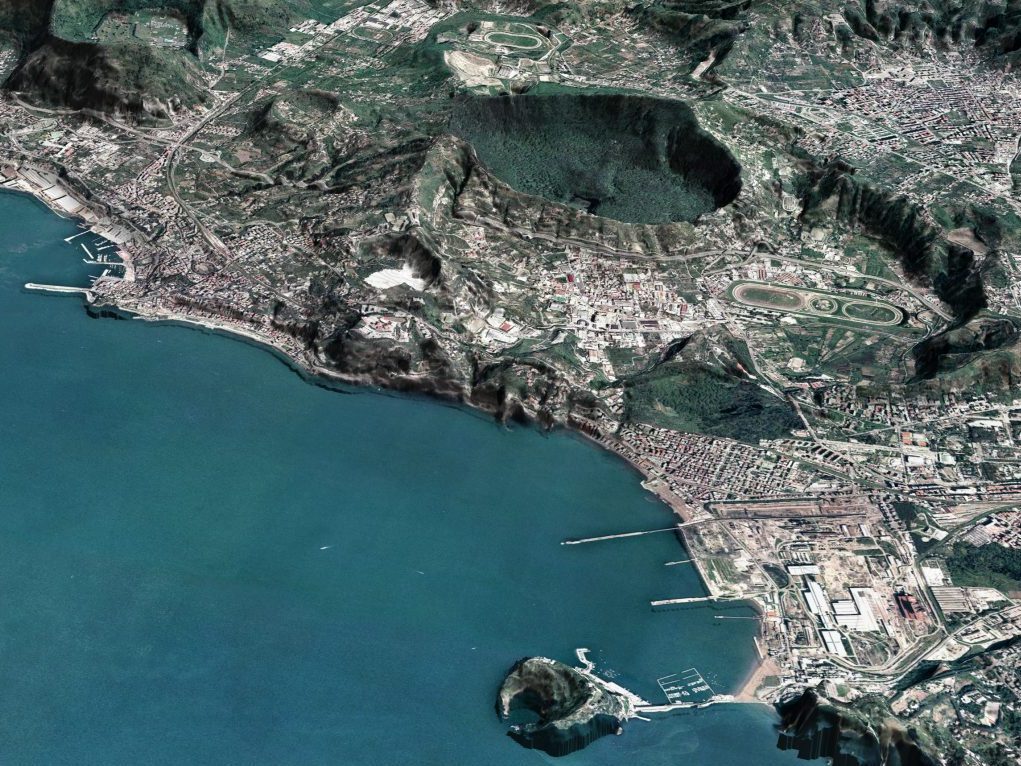
The same volcanic forces that made Baiae a spa town eventually pulled it under. This corner of the coast sits inside the Campi Flegrei, or Phlegraean Fields, a vast and still active volcanic caldera. Here the ground does something unusual: it slowly rises and falls as pressure builds and eases in the magma chamber below. Geologists call the phenomenon bradyseism.
Over many centuries, this movement gradually lowered the ancient shoreline. There was no single dramatic night when the city vanished. Instead, room by room and street by street, the lower districts of Baiae settled beneath the water, until a wide band of the old coast lay submerged in the shallow bay. What you can walk on land today was once the higher, inland part of town. What now rests underwater was the elegant waterfront the Romans prized most.
Walking the streets of a drowned city
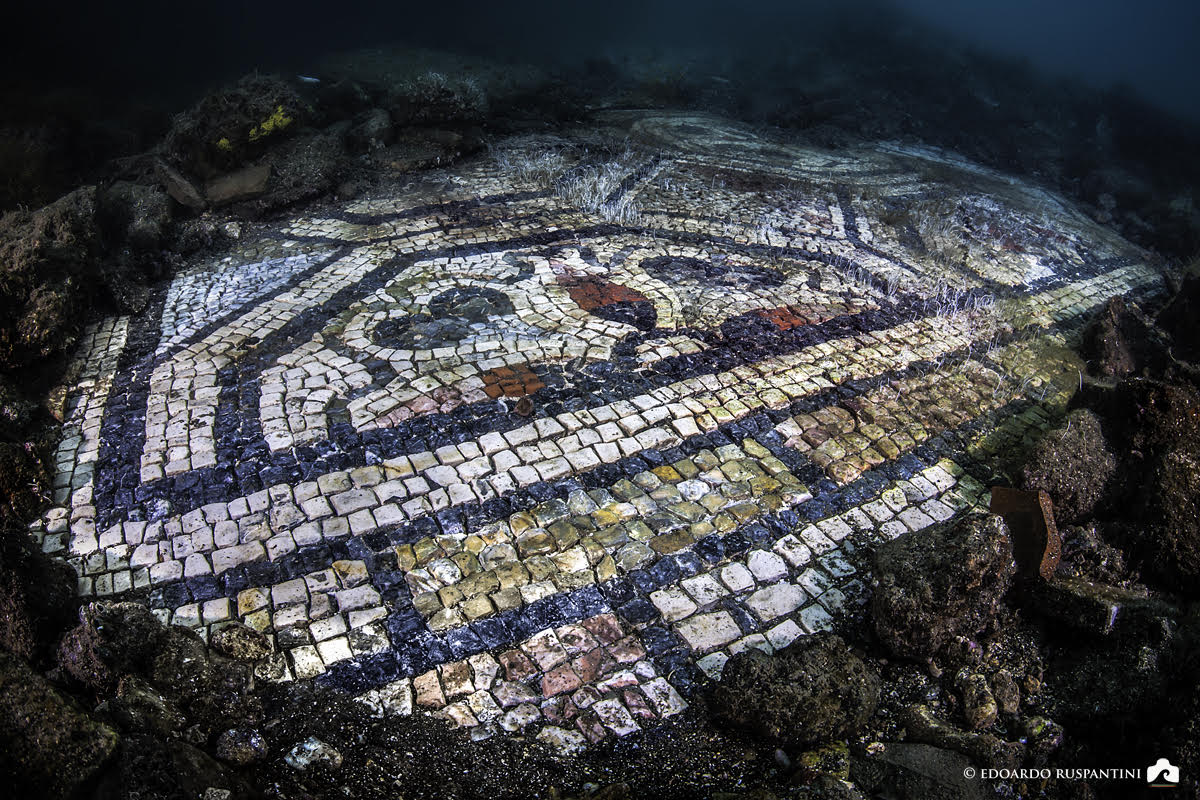
Because the ruins lie only a few meters down, Baiae is often described as an underwater version of Pompeii, though the feeling is entirely its own. Instead of ash, the city is wrapped in sea grass and light, its walls home to octopus, bream, and grouper. A handful of sites make up the heart of the visit.
The nymphaeum of Claudius and its statues
Near Punta Epitaffio, about five meters down, lies a rectangular hall believed to have belonged to the emperor Claudius. It was a nymphaeum, a richly decorated banquet room built around water and lined with niches that once held marble statues. Among the sculptures recovered here was a group depicting a scene from the Odyssey, Ulysses offering wine to the giant Polyphemus. Today faithful copies stand in their original places underwater, softened by algae, while fish drift between them.
The Villa a Protiro and its hidden mosaics
Further along the old road stands the Villa a Protiro, named for its columned entrance porch. Its floors preserve beautiful black and white mosaics, and here visitors witness one of the most memorable moments of any trip to Baiae. To protect the fragile tiles, guides keep them buried under a thin layer of sand. During a visit, a guide will gently fan away the sand to reveal a patch of ancient floor, let you admire it, and then carefully cover it again before leaving. For a few minutes, you look at a Roman room exactly as its owners once did.
The Villa dei Pisoni, Portus Julius, and the Via Herculanea
Other sites fill out the picture of a working resort town. The grand Villa dei Pisoni is identified by a lead water pipe stamped with the family name, the same Pisoni linked to a famous plot against Nero, after which the villa is said to have been confiscated. Nearby lie the remains of Portus Julius, first built as a military harbor and later turned to trade, and the Via Herculanea, the paved road that once ran through it all, its stones still traceable across the seabed.
Meeting the emperors, below and above the water
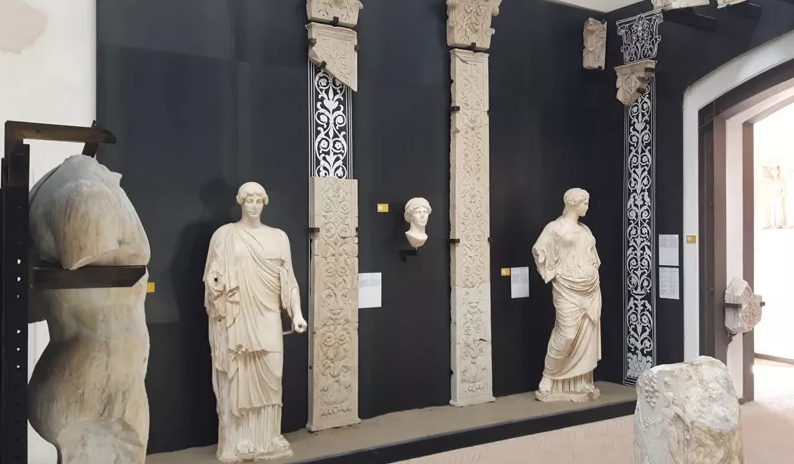
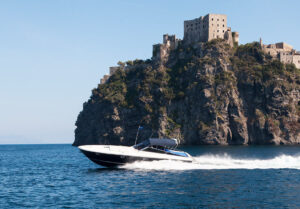
Almost all of the marble statues you see underwater are careful reproductions. The originals were lifted from the sea to protect them, and they are now displayed a short distance away in the Aragonese Castle of Baia, home to the Archaeological Museum of the Campi Flegrei. Visiting both is worth the effort: underwater you meet the sculptures in the strange, shifting light where they spent centuries, and on land you stand face to face with the real thing. Together they tell the whole story, from the villa to the seabed to the museum case.
How to see it today
Since 2002 the site has been a protected marine area, and access is carefully managed. You cannot simply anchor and swim in; visits happen only with authorized guides, which is exactly what has kept the ruins so intact. There are three main ways to experience it, each suited to a different comfort level.
For those who would rather stay dry, glass-bottomed and partly submerged boats glide over the ruins and let you look down onto walls, columns, and mosaics from your seat, an easy and surprisingly moving option for families and non-swimmers. Confident swimmers can join a guided snorkel: since the key sites sit only about five meters down, no diving certification is needed to hover directly above a mosaic or a row of statues. Certified divers, and beginners trying a supervised first dive, can go closer still, following marked routes at a slow, guided pace.
When to go and what to know
Tours generally run from spring through autumn, when the sea is calmest and warmest. Visibility is the one thing worth understanding in advance: this is a shallow, living bay rather than a tropical reef, so the water can look a little hazy, and a calm, clear day makes all the difference. The reward is not schools of bright fish but something rarer, the sensation of swimming slowly through rooms and streets where emperors once dined.
It also pairs naturally with the rest of the Campi Flegrei, one of the least crowded and most atmospheric corners of the Bay of Naples. Whichever way you choose to see it, Baiae offers something very few places can: a chance to look down through clear water and find the ancient world looking back, close enough to touch.