There is a particular moment on a boat day around Ischia when the coastline changes character. The road pulls inland, the hotels thin out, and what remains is a sequence of coves with a few umbrellas, a wooden jetty, and a terrace built almost at sea level. Some of the island’s most memorable tables are exactly there, in places where arriving by car is either impossible or so impractical that almost nobody does it.
These are the addresses travelers ask about most often once they are on the water: La Pace on the Scarrupata coast, the small cluster of restaurants in the bay of Cartaromana below the Aragonese Castle, and the far end of the Maronti beach where the road simply gives up. This guide explains where they are, what makes each bay different, and how a lunch stop actually works when you are arriving from the sea rather than from a parking lot.
Why some of Ischia’s best tables face the water, not the road
Ischia is a volcanic island with a steep, folded coastline. Between Ischia Ponte and Sant’Angelo, the terrain drops toward the sea in ridges and gullies that were never worth cutting a road through. What grew there instead were fishing landings, small family houses, and eventually the kind of restaurant that serves what came out of the water that morning and does not need a sign on the main road to fill its tables.
It is worth being precise about the phrase “only reachable by boat,” because it is used loosely. A few of these places genuinely have no practical land access. Others are reached on foot by a long descent or by a short water taxi hop, which means a car will not get you there but your own two feet, in theory, might. The distinction matters when you are planning a day, because it changes how much time you need and how much effort the approach requires in August heat.
La Pace and the Scarrupata coast
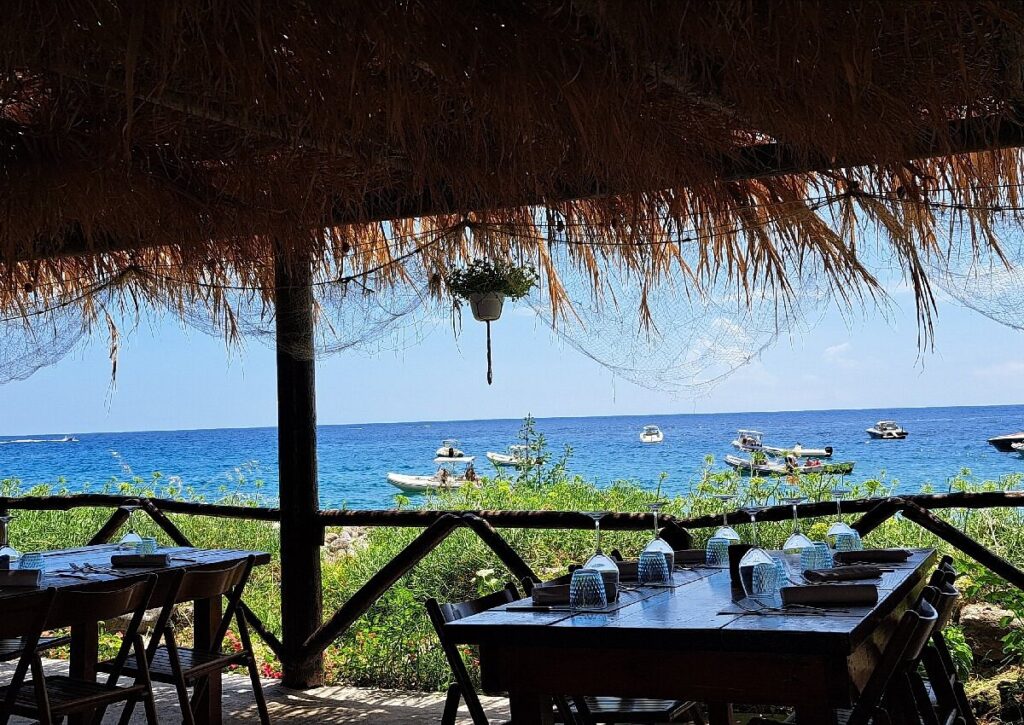
La Pace sits on the Scarrupata di Barano, the southeastern flank of the island below the Piano Liguori ridge, on a pebble cove framed by dark volcanic rock. It is the closest thing Ischia has to a genuinely sea-only restaurant, and it is the name that comes up most often among guests who have spent a day on the water here.
The arrival is part of the experience. Boats anchor in the cove, and a small tender comes out to collect guests and bring them to the jetty. From the water, the setting reads almost like an uninhabited island: a strip of shingle, a terrace under shade, and very little else in view. There is a footpath down from the Chiummano side, but visitors describe it as steep, exposed, and loose underfoot, which is why the overwhelming majority of people who eat there arrive from the sea.
The kitchen is oriented around seafood and simple pasta, in the register you would expect from a cove restaurant rather than from a formal dining room. Service tends to be centered on the lunch hours, which is consistent with how the place functions: guests come in during the middle of the day, swim, eat, and continue along the coast. If Scarrupata is on your route, it works best as the anchor point of the afternoon rather than as a quick stop squeezed between two other destinations.
Cartaromana bay, in the shadow of the Aragonese Castle
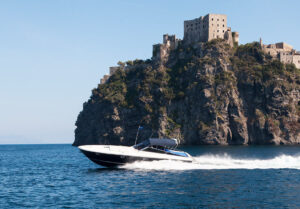
The bay of Cartaromana lies just south of Ischia Ponte, and it is the single most concentrated area of sea-access dining on the island. There is no through road down to the shoreline. People arrive either on a private boat, on one of the small water taxis that shuttle from Ischia Ponte, or on foot along a descent that takes a good deal longer than most visitors expect.
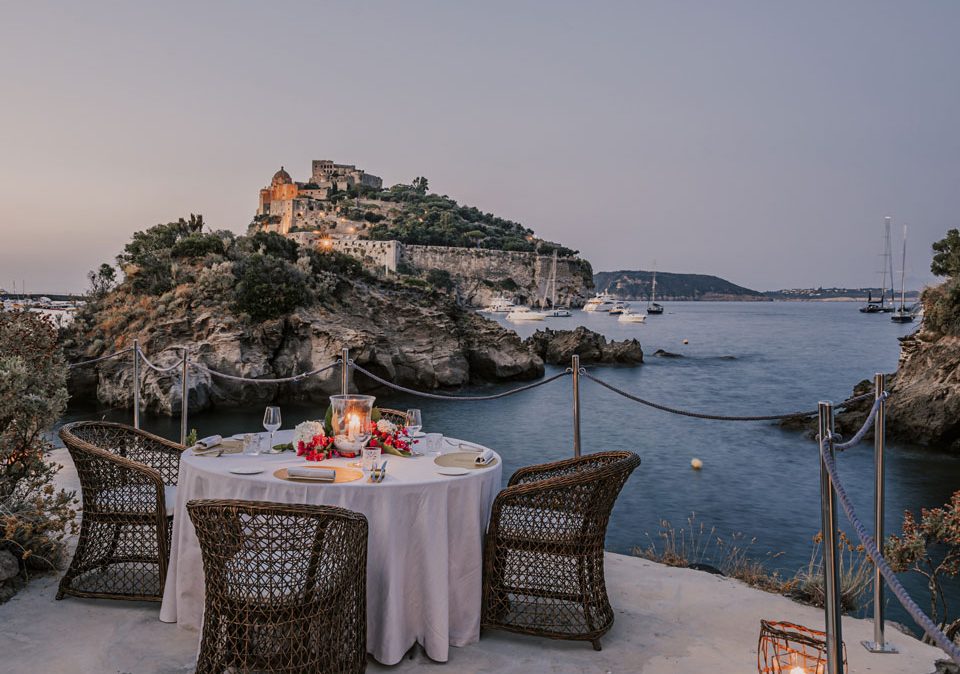
What makes the bay unusual is the view. You eat looking directly at the Aragonese Castle, with the Torre di Michelangelo on the headland behind you and, under the surface of the bay, the submerged remains of Aenaria, the Roman settlement that once stood here. Few places in the Gulf of Naples let you have lunch inside that much visible history.
Giardino Eden
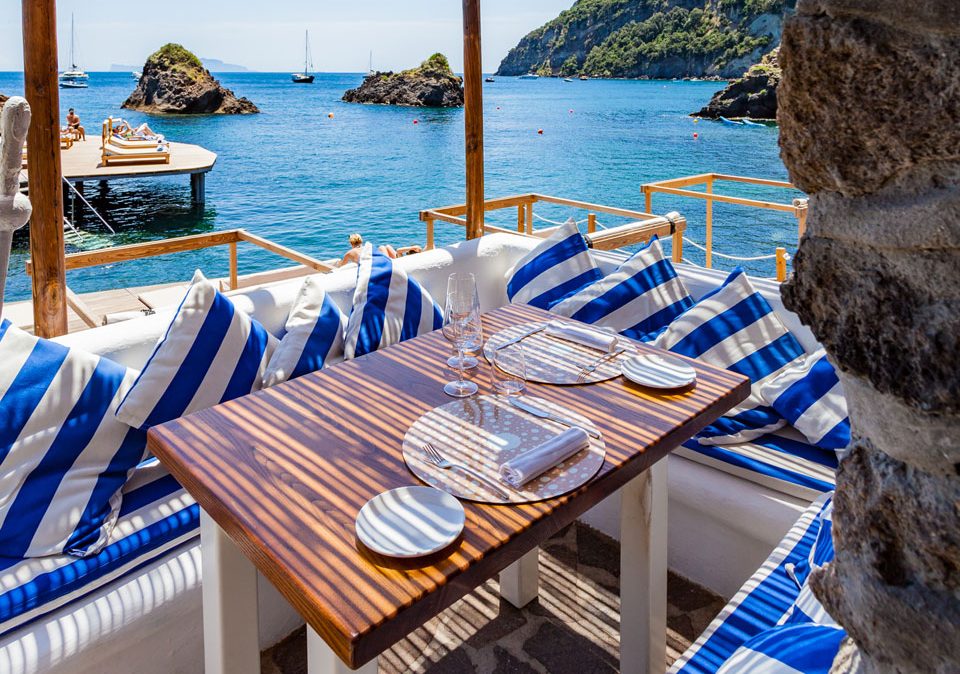
Giardino Eden is the best known address on this stretch: a terraced property carved into the rock, combining a beach club, a swimming area, and a restaurant looking straight across at the castle. It is the most polished of the Cartaromana options and the one most often requested by name.
To be accurate, Eden is not strictly boat-only. It has no car access, and most guests reach it from the water, but it is connected to Ischia Ponte by a walking route. In practice, arriving by boat is the version of the experience that makes sense, particularly at midday. The setting is the reason to go, and the arrival from the water is a large part of the setting.
Cocò Mare, I Pirati and the smaller tables on the bay
Along the same shoreline there are several smaller places with a different character. Cocò Mare sits by the entrance to the Torre di Michelangelo and is reached by water taxi, including in the evening, when the illuminated castle becomes the whole backdrop. I Pirati is built practically on the water on the Cartaromana beach, and guests describe the same tender routine as at La Pace: you cut the engine, call ahead, and someone comes out to bring you in. Gardenia Mare and Da Maria complete the bay, both attached to small family-run properties.
None of these are large restaurants. They fill quickly in high season, and a table in the evening is a different proposition from a table at lunch. If Cartaromana is the reason you want to be on the water, it deserves to be treated as a destination in itself and not as a detour on the way back to port.
The Maronti side, where the road gives up
On the southern coast, the long beach of the Maronti runs east from Sant’Angelo, the car-free village that already has to be entered on foot. The western end of the beach, toward the fumaroles and the Cava Scura gorge, is where land access becomes genuinely awkward. There is no coastal road along that stretch, which is why a small taxi boat service runs between Sant’Angelo and points along the beach, and why so many people simply arrive by sea.
The restaurants here are beach establishments rather than hidden coves: family-run kitchens attached to sun bed concessions, serving fried fish, pasta with clams, and whatever the morning brought in. What they offer is proximity to a part of the island where the sand is warm from volcanic activity underneath and the thermal water surfaces at the shoreline. If the geology interests you, it connects directly to the wider story of Ischia’s thermal springs and to the bay of Sorgeto on the opposite side of the island.
How a lunch stop actually works on a private boat
The mechanics are simpler than most travelers assume, but they are worth understanding before the day begins.
In almost every one of these coves there is no dock large enough to take a boat alongside. You anchor a short distance out, in clear water, and the restaurant sends a tender to collect you. Waiting time varies with how busy the bay is, and in the middle of August it can stretch. Once ashore, you are on the restaurant’s schedule rather than your own, which is exactly why these stops work far better on a private boat than on a fixed group tour: nobody is standing on the terrace telling you the departure is in twenty minutes.
Tables are arranged directly with the restaurant. These are independent businesses with their own reservation systems, and in high season the popular ones fill days ahead. The practical role of your skipper is different and equally useful: knowing which bays hold their anchorage in a given wind, how long the approach takes from where you are, and whether the sea state on the southern coast makes a Scarrupata lunch comfortable that day or a poor idea.
Timing, season and what to decide in advance
Two decisions shape the day more than anything else.
The first is which coast you are eating on. Cartaromana faces east and is protected from the prevailing summer breeze, which makes it dependable and easy to combine with Ischia Ponte and the castle. The Scarrupata and the Maronti face south and southeast, and they are wonderful in calm conditions and unpleasant when the sea gets up. Choosing the bay on the morning of the tour, rather than weeks earlier, is usually the better approach.
The second is what the lunch is for. A long table stop in a cove is a two to three hour commitment once you include the tender, the swim, and the meal itself. That is a substantial share of a day at sea. If your priority is circling the island and seeing the coastline properly, a lighter option on board keeps the day moving. If the meal is the memory you want, build the route around it and accept that you will see less coast.
Building the day around the table you choose
Ischia rewards travelers who slow down, and eating in a cove that no road reaches is one of the clearest ways to feel the difference between visiting an island and spending a day on it. A full day around Ischia leaves room for one of these stops without rushing, and the classic pairing with Procida, on our Ischia and Procida itinerary, works well when the meal is treated as the centerpiece of the afternoon rather than an interruption.
Travelers arriving from further away often ask whether it can be combined with another island in the same day. It can, on the Capri and Ischia itinerary, though the timing is tighter and the lunch stop needs to be planned rather than improvised. And if you are basing yourself elsewhere in the gulf, a private transfer to Ischia removes the ferry timetable from the equation entirely, which matters more than people expect when the reason you are going is a table that only serves at lunch.
None of these restaurants are ours, and none of them need our recommendation to be busy. What we can do is get you there comfortably, at the right hour, in the right bay for the day’s conditions. The rest is a jetty, a terrace, and a few hours where the only way anyone reaches you is from the water. If you are shaping a day around one of them, tell us what you have in mind and we will build the route around it.
Frequently asked questions
Are these restaurants really only reachable by boat?
Some are, in practice. La Pace on the Scarrupata coast has a footpath down from the ridge, but it is steep and exposed, so almost everyone arrives by sea. The Cartaromana restaurants have no car access at all and are reached by private boat, by water taxi from Ischia Ponte, or on a long walk down. The western Maronti is served by a small taxi boat because there is no coastal road along that stretch.
Can a private boat tour of Ischia include a lunch stop?
Yes. Every itinerary is built around what you want from the day, and a table in one of these coves can be the centerpiece of the afternoon. A proper stop takes roughly two to three hours once you include the tender ride, a swim, and the meal itself, so the rest of the route is planned around it.
Do we need to book a table in advance?
In high season, yes. These are small independent restaurants with their own reservation systems, and the well known ones fill days ahead, particularly for dinner. Reservations are made directly with the restaurant. Our role is the logistics: reaching the right bay at the right hour, in conditions that make the anchorage comfortable.
How do you get from the boat to the restaurant?
In most of these coves there is no dock to come alongside. You anchor a short distance offshore in clear water and the restaurant sends a small tender to collect you from the boat and bring you to the jetty. The same tender takes you back afterwards. Waiting times can stretch in the busiest weeks of summer.
Is it better to stop for lunch ashore or eat on board?
It depends on what you want from the day. A cove restaurant is an experience in itself and takes a meaningful share of the hours available. If your priority is seeing the coastline of Ischia properly, or combining the island with Procida, something lighter on board keeps the day moving and leaves more time on the water.
Which side of the island is the safer choice for a table by the sea?
Cartaromana faces east, sheltered from the prevailing summer breeze, and is the most dependable option. The Scarrupata and the Maronti face south and southeast and are best in calm conditions. This is a decision best made on the morning of the tour, once the sea state is clear.