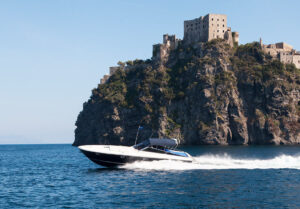
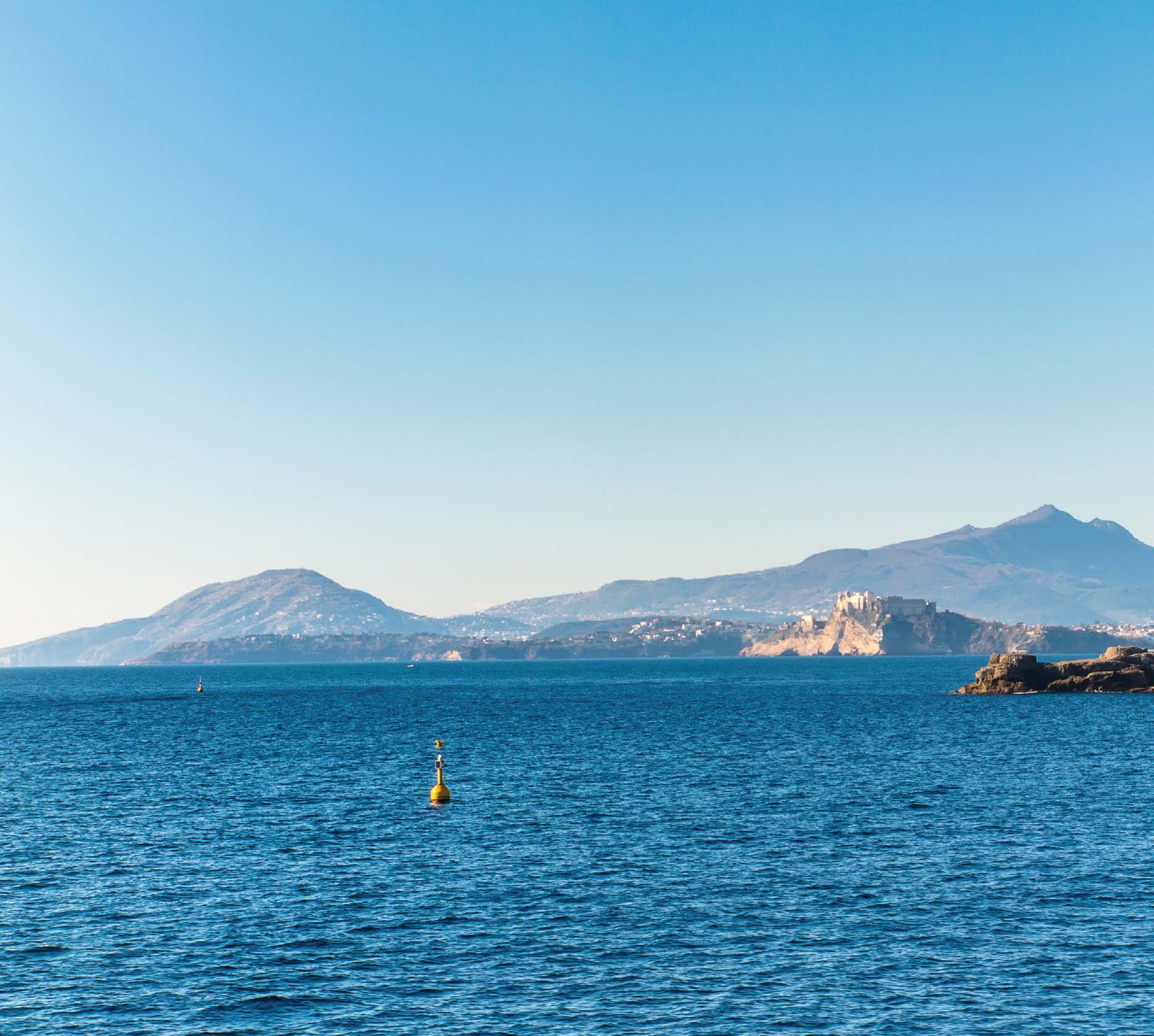
Ischia is the largest island in the Bay of Naples, and the one most American travelers leave for a second trip. It is greener than Capri, considerably bigger, and built around thermal water rather than around a single famous piazza. Getting there looks simple on a map. In practice, it is the one leg of a Southern Italy itinerary that catches people out.
The reason is that Naples does not have one departure point for Ischia. It has several, they are not interchangeable, and the one you choose determines which side of the island you land on. This guide covers what to decide before you book: where to leave from, how the airport connects to the piers, and how timing shapes the rest of your day.
Naples has more than one departure point, and they are not interchangeable
Most travelers assume there is a single ferry terminal in Naples. There are three passenger piers inside the city, plus a fourth departure point outside it, and each serves different vessels and different ports on Ischia. Booking a crossing without knowing which pier it leaves from is the most common way to start the day badly.
Molo Beverello
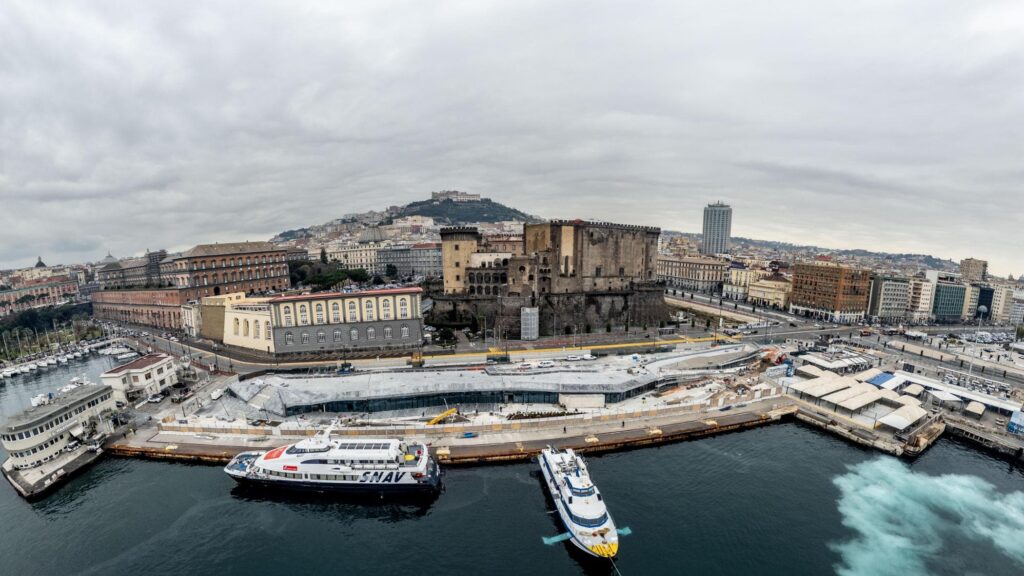
Beverello is the busiest passenger pier and the one closest to the historic center, sitting just below Piazza Municipio. It handles hydrofoils and high speed craft, which means faster crossings and no vehicles. It also offers the widest choice of arrival ports on Ischia, with services reaching Ischia Porto, Casamicciola Terme, and Forio depending on the operator and the season. If you are traveling light and want the shortest time on the water, this is usually the pier you want.
Calata Porta di Massa
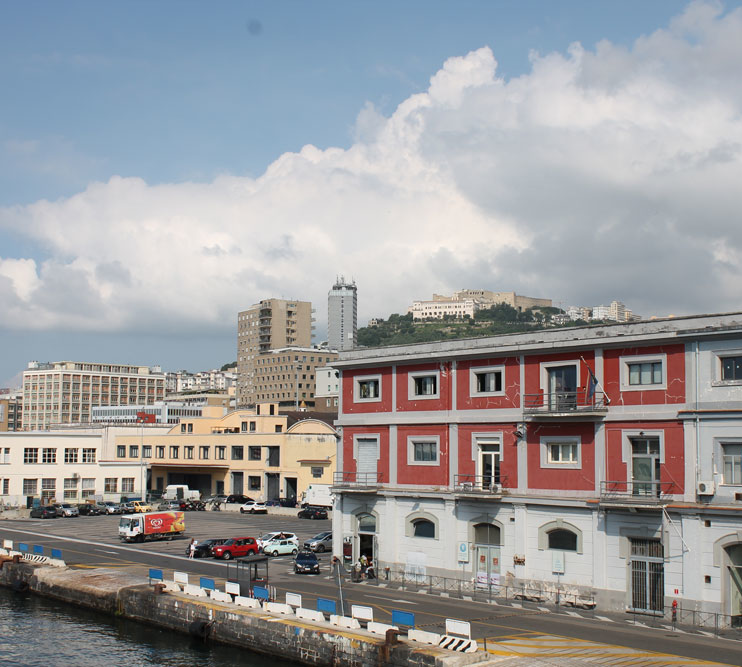
Roughly a kilometer east of Beverello, Porta di Massa is the conventional ferry terminal. Crossings are slower and steadier, and this is where vehicles are loaded. It is the practical choice if you are carrying several large suitcases, traveling with young children who do not enjoy the motion of a hydrofoil, or bringing a rental car to the island. Arrivals are concentrated on Ischia Porto and Casamicciola.
Mergellina
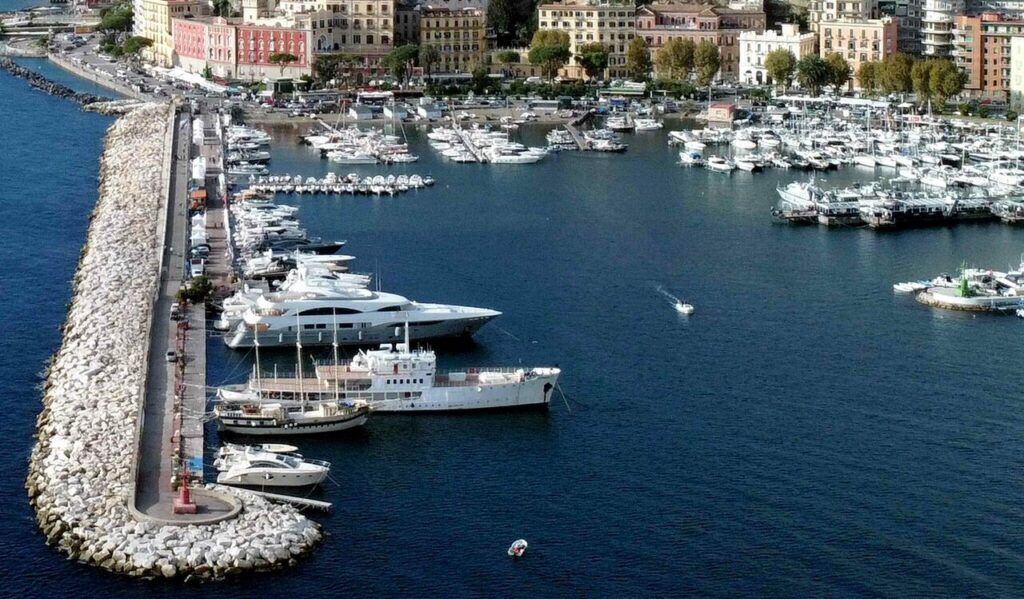
Mergellina sits west of the center, along the seafront below Posillipo, and is served by its own metro station. It handles hydrofoils rather than ferries, with services to Ischia Porto and Forio. For anyone staying in Chiaia, Mergellina, or Posillipo, it is far more convenient than crossing the city to reach Beverello, and it is noticeably calmer than the main port on a July morning.
Pozzuoli
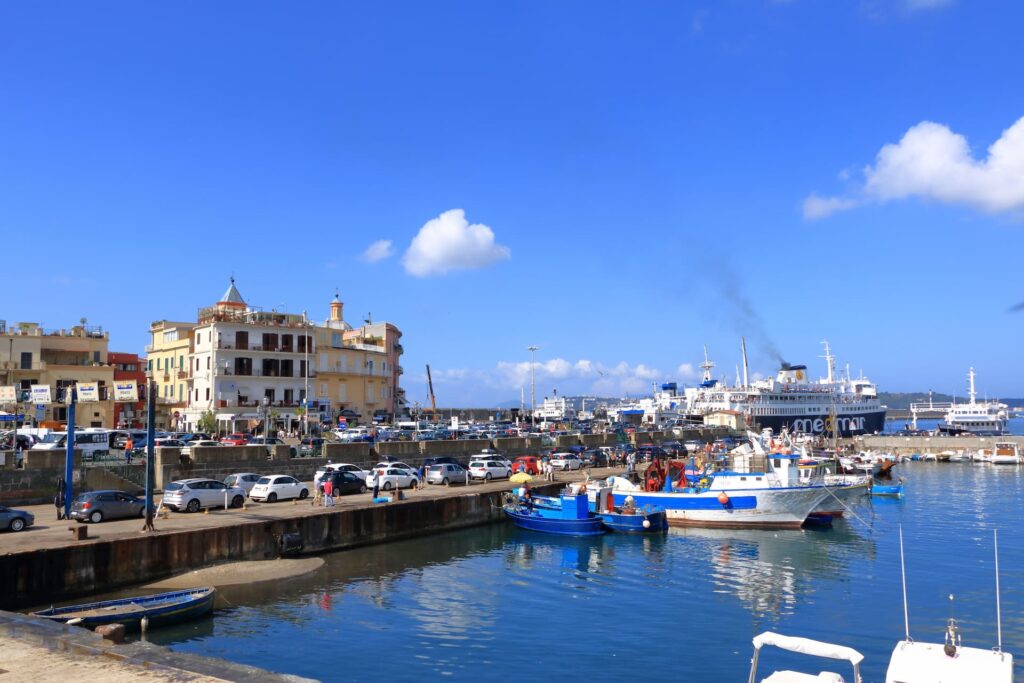
Pozzuoli lies about ten kilometers west of Naples, in the Phlegraean Fields. It is not a city pier, and most visitors never consider it, but it is the closest mainland departure point to Ischia and it takes vehicles. If you are arriving from the north by car, or staying in the Phlegraean area, leaving from Pozzuoli avoids the traffic around the main port entirely.
Arriving from the airport or Napoli Centrale
Naples Capodichino is the nearest airport to Ischia, and there is no direct connection from the terminal to the island. You reach a pier first, then cross. The Alibus shuttle runs between the airport and the port area and serves the main piers, and taxis cover the same route in around twenty minutes depending on traffic. From Napoli Centrale, the port is a short ride away, and Mergellina is reachable on the metro.
The detail worth planning around is the distance between Beverello and Porta di Massa. A kilometer sounds trivial until you are covering it in August heat with two large suitcases and forty minutes before departure. If you have booked a conventional ferry, confirm that you are being dropped at Porta di Massa and not at Beverello, because the two are frequently confused and the correction costs time you may not have.
Match your departure to your arrival port, not the other way around
Ischia has five ports, and they sit on different sides of an island that takes real time to cross by road. Landing at Ischia Porto when your hotel is in Forio or Sant’Angelo means a taxi or bus journey after a crossing you thought was the last leg of the day.
The right sequence is to start from your accommodation, work out which port is closest to it, and only then choose the departure pier that actually serves it. Scheduled services concentrate on the eastern side of the island, and coverage of the western and southern ports is thinner than most booking sites make clear. Our page on private boat transfers to Ischia sets out which ports the public network reaches and which it largely does not.
The timing decisions that shape the whole day
Scheduled crossings to Ischia stop earlier in the day than most visitors expect, and the last useful departure is often mid evening rather than late night. Outside the peak weeks the timetable thins further, and the final services to the smaller ports go first. If your flight lands in the afternoon, the margin between arrival and the last practical crossing is narrower than it looks on paper.
Summer weekends bring the opposite problem. Return crossings toward Naples fill up on Sunday afternoons, when day visitors and weekend residents leave the island together. Booking in advance matters more on the way back than on the way out.
Sea conditions are the third variable. Hydrofoils are more sensitive to swell than conventional ferries, and when the sea gets up it is the fast services that are suspended first. A ferry from Porta di Massa or Pozzuoli will often still run when the hydrofoils have stopped, which is worth knowing if your plans depend on reaching the island on a particular day.
Ferry or hydrofoil: how to choose
Hydrofoils and high speed craft are the faster option, typically covering the crossing in well under an hour, and they suit travelers with hand luggage and a schedule to keep. Seating is enclosed, deck access is limited, and the ride is firmer in choppy conditions.
Conventional ferries take longer, generally over an hour depending on the route, but they carry vehicles, handle large luggage more easily, and offer open deck space. Crossing the bay on an open deck with Vesuvius behind you and Procida passing to starboard is a genuinely better hour than sitting in a sealed cabin. Several operators run these routes, including Caremar, Medmar, Alilauro, and SNAV, and schedules vary by season, so it is worth checking the current timetable directly with the operator rather than relying on last year’s information. It is also worth confirming luggage rules before you travel, since some operators apply a supplement for bags above standard size.
When a private boat changes the equation
There are situations where the scheduled network simply does not have an answer. You are staying at Sant’Angelo or Lacco Ameno, which public services barely reach. You are arriving late, after the last crossing to your side of the island. You are a family of five with a week of luggage, facing a shuttle between piers. Or you are moving on from Ischia to Procida and the coast, and the timetable would cost you half a day.
A private transfer removes the timetable from the equation. You leave when you are ready, from the pier that suits you, and you land at the port closest to where you are staying rather than the one the schedule dictates. On a clear morning the crossing becomes part of the trip rather than an interval in it, with time for a swim in a quiet bay before you go ashore. If that fits how you are traveling, the private transfer to Ischia page covers how it works, and the Ischia and Procida itinerary shows what a full day on the water looks like.
What waits for you once you land
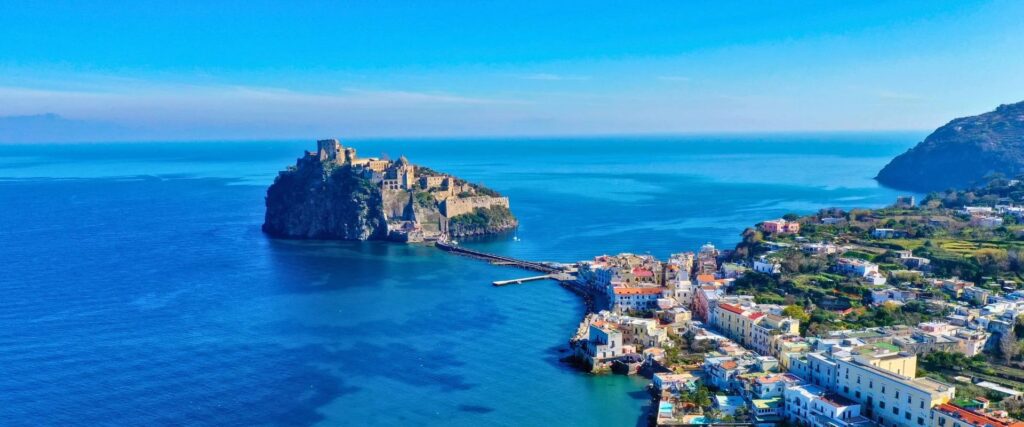
Ischia rewards the effort of getting there. The island sits on an active volcanic system, and that geology is the reason for its thermal springs, which shaped the local economy long before tourism arrived. On the southern coast, the bay at Sorgeto is where hot springs meet the sea directly, with no spa built around them.
The same volcanic soil produces the island’s wines, and the story of Casa D’Ambra explains how terraced vineyards survived on slopes that should have been impossible to farm. For history, the Aragonese Castle on its own islet is the single most striking thing on the coastline, and it is best understood from the water. If Ischia is one stop in a longer plan, our guide to planning a day by boat from Naples puts the distances in context.
Frequently asked questions
Which port in Naples should I leave from for Ischia?
It depends on your luggage and your destination on the island. Molo Beverello serves hydrofoils and offers the widest choice of arrival ports. Calata Porta di Massa handles conventional ferries and vehicles. Mergellina is convenient if you are staying in the western part of the city, and Pozzuoli suits anyone arriving by car from the north.
Is there a direct connection from Naples airport to Ischia?
No. You travel from Capodichino to one of the piers first, by Alibus shuttle or taxi, and cross from there. Allow more time than the map suggests, particularly in summer.
How long does the crossing to Ischia take?
It varies by vessel and route. Hydrofoils are typically well under an hour, conventional ferries generally longer. Check the current timetable with the operator, since services change with the season.
Can I reach Sant’Angelo or Lacco Ameno directly?
Scheduled services to these ports are very limited. A private boat transfer is usually the only way to arrive directly, which avoids a road journey across the island after you land.
What happens if the sea is rough?
Hydrofoils are suspended before conventional ferries in poor conditions. If your plans depend on reaching Ischia on a specific day, a ferry route from Porta di Massa or Pozzuoli is the more resilient option.