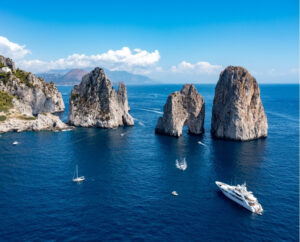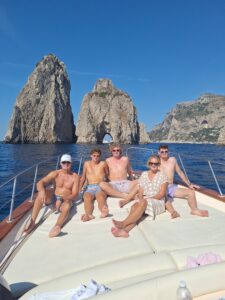
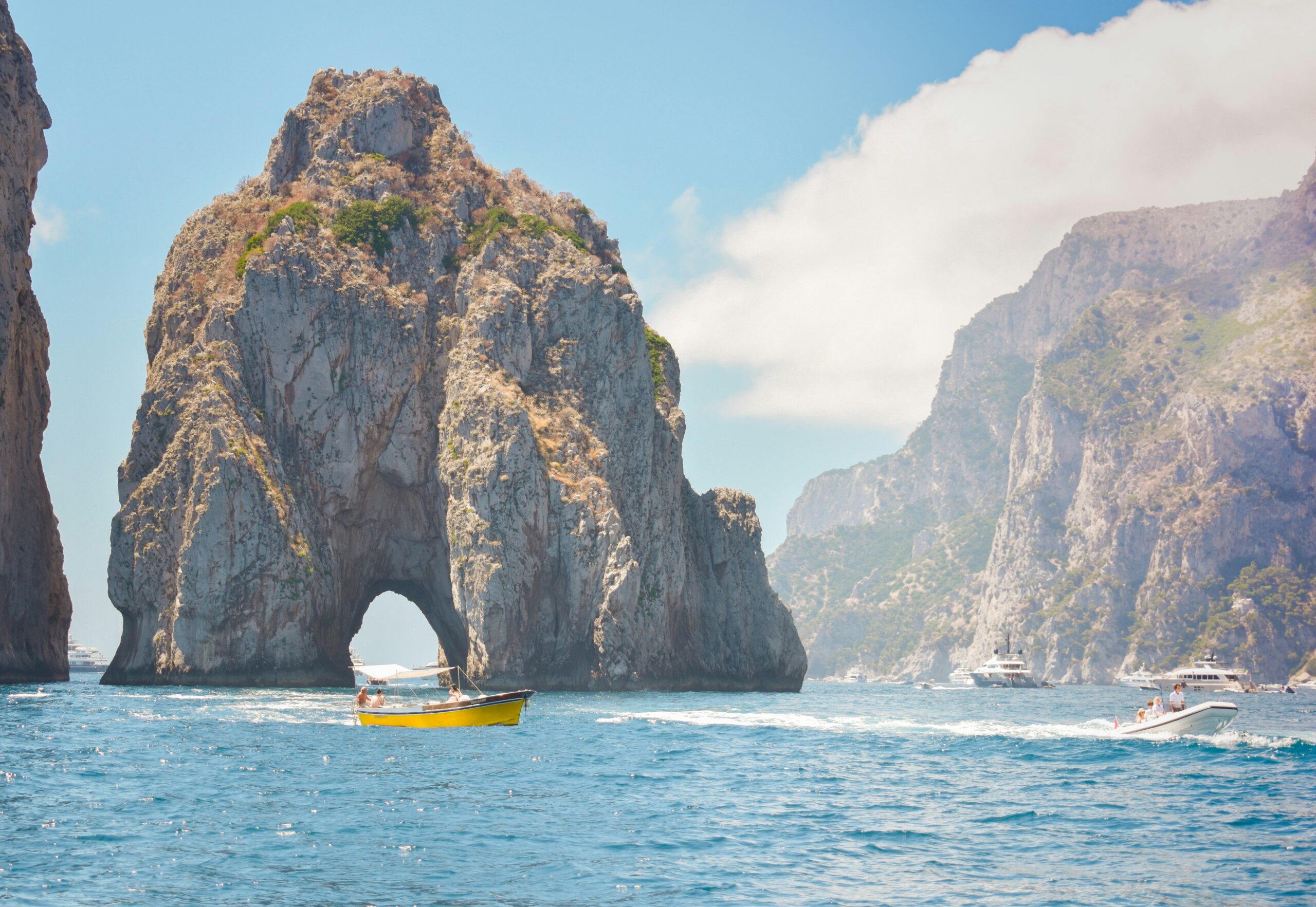
Capri is one of those destinations where the timing of your visit shapes the entire experience. The island’s geography is fixed, but everything else — the light, the crowds, the sea, the cost, the mood — changes dramatically from one month to the next. This guide gives you an honest picture of what each season actually looks like, with particular attention to what it means for a day on the water from Naples.
The Short Answer
If you want the best combination of warm weather, swimmable sea, and manageable crowds, plan for May, June, or September. These months offer the most favorable conditions for a private boat tour: stable weather, good visibility, clear water, and fewer boats at anchor in the coves. July and August are not bad months to visit Capri, but they require you to know what you are accepting in exchange for peak summer conditions. October is underrated. Winter is for a very specific kind of traveler.
Month by Month: What to Expect in Capri
April
April marks the beginning of Capri’s tourist season, typically from Easter onward. The island reopens after the quiet winter months, and the first visitors begin to arrive. The weather is mild but variable — warm days alternate with cooler, windier ones, and a rain shower is always possible. Sea temperatures in April hover around 15–16°C, which is cool for swimming.
What April offers is something genuinely different from the rest of the season: uncrowded streets, open restaurants that are still rested and attentive, and a coastal landscape covered in wildflowers. Wild freesias bloom in the Cetrella Valley, and the scent of citrus and jasmine drifts through the lanes of Anacapri.
For a boat tour, April is viable from mid-month onward when weather patterns stabilize. The Blue Grotto is almost always accessible without a queue, which in summer can run over an hour. Sea conditions require checking in advance, but an April crossing on a calm day is one of the quieter pleasures the Gulf of Naples offers.
May
May is arguably the finest month on Capri. The days are long and warm — temperatures settle between 18°C and 24°C — the spring flora is at its peak, and the sea begins to warm toward 18°C, making it swimmable for most people. Tourism picks up, but the island has not yet reached its summer saturation.
For a private boat tour, May is close to ideal. Coves that will be packed with vessels in July are still quiet. The light in late morning and afternoon is excellent. The Blue Grotto is accessible with manageable wait times. And the towns of Capri and Anacapri can be explored at a comfortable pace, without the shoulder-to-shoulder crowds of high summer.
Hotels still have availability, prices are below peak, and the overall tempo of the island — restaurants, shops, locals — is unhurried. If you are planning a premium experience and want everything working in your favor, May is the answer.
June
June combines the best of spring conditions with the first genuinely warm days of summer. Sea temperatures climb to 21–22°C, making swimming consistently pleasant. The days are long, the light is extraordinary — particularly in the late afternoon, when the limestone cliffs of the southern coast take on a gold and amber tone — and the island is still a step short of its peak-season intensity.
The second half of June begins to feel like high summer. Day-tripper ferries from Naples fill up earlier, the Piazzetta gets crowded by early afternoon, and hotel prices approach their July peak. For a boat tour, the first three weeks of June remain excellent: the sea is warm, the coves are accessible, and the crossing from Naples in the morning is still a pleasure rather than a logistical challenge.
June is the last month before Capri shifts fully into peak-season mode. It rewards travelers who book ahead.
July
July is peak season. The island receives its maximum number of visitors — daily arrivals reach 15,000 to 20,000 people on an island with around 7,000 permanent residents. Ferries run at full capacity, the Piazzetta is crowded from mid-morning onward, and the Blue Grotto queue can run well over an hour at peak times.
What July delivers in return is the warmest water of the year — sea temperatures reach 24–25°C — and the longest days. The swimming conditions at Marina Piccola, at the coves near Punta Carena, and along the eastern coast are genuinely excellent. The island is at its most glamorous and most alive.
For a private boat, July is entirely workable but requires planning. An early departure — before nine in the morning — is the most effective way to reach the best coves before the day-tripper traffic peaks. The flexibility to adjust the route and find a quiet swimming spot is one of the practical advantages of a private charter over a shared tour. Book everything well in advance.
August
August follows the same pattern as July, with slightly higher temperatures on land — often 28–30°C at midday — and sea temperatures at their annual peak. The island is at its busiest. If you are visiting in August, the early morning is your most valuable resource: the light is gentler, the coves are emptier, and the towns are still quiet before the ferry arrivals begin.
The Ferragosto period, centered on August 15, is traditionally the busiest week of the Italian summer. Capri fills to capacity, and the atmosphere on land can feel overwhelming if you are not prepared for it. On the water, however, the experience remains exceptional: the clarity of the sea in August, the warmth of the light in the late afternoon, and the views from the southern coast toward the horizon are not diminished by the crowds on shore.
September
September is the month that experienced travelers consistently recommend, and for good reason. The sea retains the warmth accumulated over summer — temperatures remain around 23–24°C — while the crowds begin to thin after the first week. Day-tripper volumes drop noticeably, hotel prices ease, and the island recovers a more measured pace.
The light in September has a quality that photographers and painters have long sought in the Mediterranean: softer than July, richer than October, with longer golden hours in the evening. For a boat tour, September combines everything: warm swimming water, manageable sea conditions, accessible coves, and a coastline that no longer needs to be shared with dozens of other vessels at every stop.
If you can travel in September, do so. The first two weeks in particular — before the October shoulder season begins — are among the best days the island offers all year.
October
October is underrated and worth serious consideration. The sea remains warm enough to swim comfortably, particularly in the first half of the month. Crowds diminish significantly after the first week. Many restaurants and shops remain open through October, and prices across the island drop from their summer peaks.
The weather is less predictable than in summer — rain becomes more frequent from mid-month onward, and occasional strong winds can close the Blue Grotto or affect sea conditions. But when October gives you a clear day, the colors of the island — the deep blue water, the yellowing vegetation, the limestone in the low autumn light — are exceptional.
For a boat tour, early October remains very good. The sea is calm on most days, the coast is essentially private, and the crossing from Naples on a clear morning, with the Gulf quiet around you, is difficult to improve on.
November to March
Capri’s tourist season officially closes in early November. Most hotels, restaurants, and shops shut down for winter, and the island returns to the rhythm of a small village with a permanent population of around 7,000 people. Ferry schedules reduce significantly.
Winter visits are for travelers who actively want solitude: the chance to walk the paths of Monte Solaro or the Via Krupp with no one else in sight, to have a coffee in the Piazzetta at the only bar that stays open all year, and to see the island without any of its seasonal performance.
Boat tours are not available in the winter months due to weather and operational closures. Sea conditions in the Gulf of Naples can be rough from November through February, with wind and swell making navigation uncomfortable and occasionally unsafe for smaller vessels.
Month-by-Month Summary
| Month | Air Temp. | Sea Temp. | Crowds | Boat Tour |
|---|---|---|---|---|
| April | 14–18°C | 15–16°C | Low | Good (mid-month) |
| May | 18–24°C | 17–18°C | Moderate | Excellent |
| June | 22–28°C | 21–22°C | Moderate–High | Excellent (1st half) |
| July | 26–30°C | 24–25°C | Peak | Good (early dep.) |
| August | 27–31°C | 25–26°C | Peak | Good (early dep.) |
| September | 22–27°C | 23–24°C | Moderate | Excellent |
| October | 17–22°C | 21–22°C | Low–Moderate | Good (1st half) |
| Nov–Mar | 8–15°C | 14–16°C | Very Low | Not available |
The Sea Makes the Difference: A Note on Boat Timing
Most guides to Capri focus on land-based experience — crowds, temperatures, prices. But if a private boat tour is part of your plan, the relevant variables are slightly different.
Water temperature matters for swimming stops. The sea at Capri reaches a comfortable swimming temperature from late May onward and stays there through October. Outside this window, the water is cold.
Sea conditions determine whether a full circumnavigation is enjoyable and whether key points — the Blue Grotto, the arch of the Faraglioni, the coves beneath Punta Carena — are accessible. May, June, and September offer the most consistently stable sea conditions of the season.
Cove availability is a real variable in July and August. The most scenic spots along the southern and western coast attract significant boat traffic on peak days. A private charter gives you the flexibility to find alternatives, but early departures remain the most effective strategy.
Light changes through the season in ways that matter more on the water than on land. The long golden hours of June and September are when the limestone cliffs, the sea caves, and the color of the water around the Faraglioni appear at their most vivid.
Planning Your Visit: Quick Reference
Planning a private boat day from Naples to Capri and want to know which dates work best for your group? Explore available itineraries or request a quote.
Frequently Asked Questions
May, early June, and September are consistently the best months. They combine warm weather, swimmable sea temperatures, and manageable crowds. For a private boat tour in particular, these months offer the most favorable sea conditions and the quietest coves along the island’s coastline.
July is busy, but not impossible. Daily visitor numbers can reach 15,000 to 20,000 on peak days. The key is timing: an early departure from Naples allows you to reach the best coves before day-tripper traffic peaks. On a private boat, you also have the flexibility to adjust your route and find uncrowded alternatives.
Yes. Early October remains very good for a boat tour: the sea is still warm enough for swimming (around 21–22°C), crowds are significantly thinner than in summer, and prices are lower. Weather becomes less predictable from mid-October onward, so checking conditions before departure is advisable.
Sea temperatures around Capri range from around 15–16°C in April to a peak of 25–26°C in August. The sea is comfortably swimmable from late May through October. The warmest period for swimming is July through early September.
Capri’s tourist season runs from Easter to early November. In winter, most hotels, restaurants, and shops close, and ferry services reduce significantly. Boat tours are not available during the winter months due to weather and operational closures.
Ferragosto is Italy’s national summer holiday, centered on August 15. It is the single busiest period of the year on Capri. If you are visiting by private boat and departing early in the morning, the experience on the water remains excellent. On land, arriving before nine or after six is the practical solution.
The Blue Grotto is most accessible during April, May, and September. In July and August, queues at the grotto entrance can exceed an hour. Access also depends on sea conditions: the entrance is less than a meter high and closes when waves are too strong, regardless of the season.