
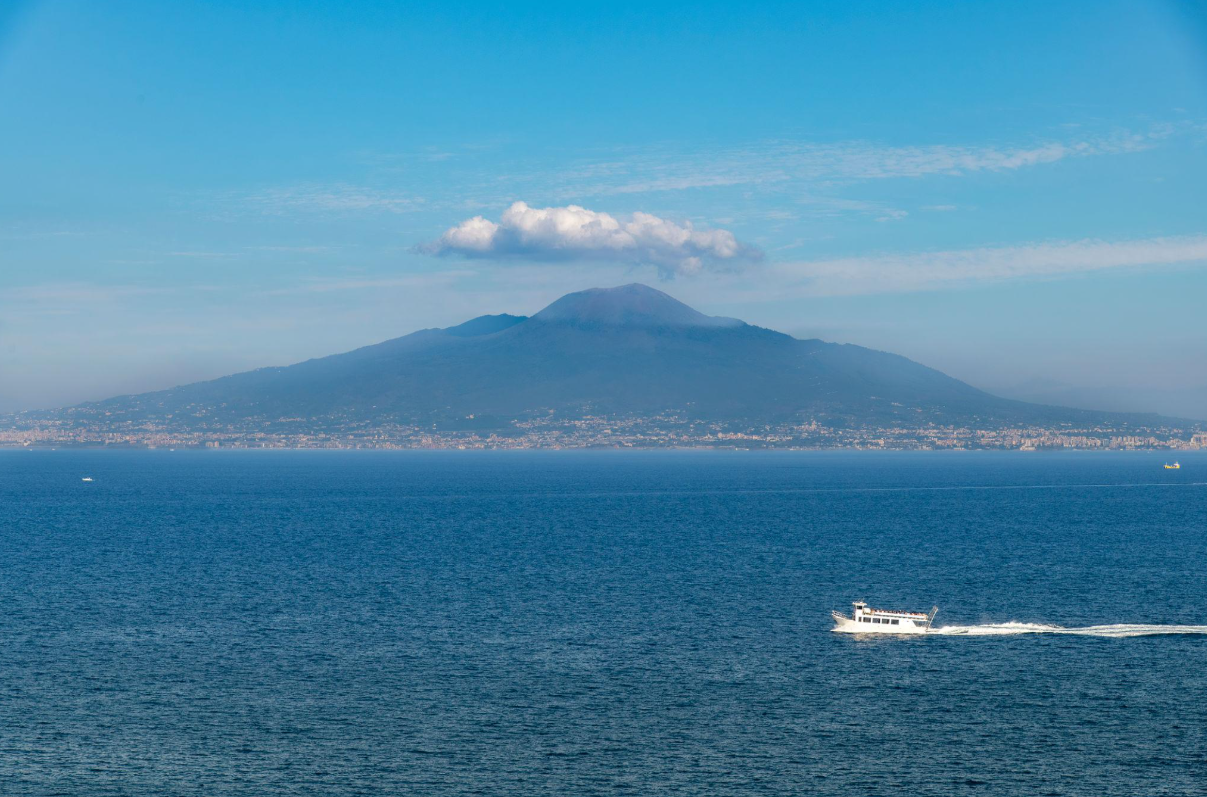
A blue sky over Naples does not necessarily mean a smooth crossing to Capri. Likewise, a cloudy morning does not automatically rule out a day on the water. In the Gulf of Naples, sea conditions depend on wind, wave direction, swell, and the route you plan to take, not just the weather icon on your phone.
That distinction matters when you are planning a private boat tour, an island-hopping day, or a transfer between the mainland and the islands. The gulf changes through the year, but no month can guarantee calm water. This guide explains the seasonal patterns, what can change during a single day, and how to plan realistically.
What good sea conditions actually mean
For a comfortable boat day, it helps to separate four things that are often grouped together as “the weather.”
- Wind: Its strength and direction influence how waves build, especially in exposed stretches of water.
- Wind waves: Shorter, locally generated waves can make a ride uncomfortable even when the sun is shining.
- Swell: Longer waves can arrive from weather systems farther away, sometimes after the local wind has eased.
- Exposure: A sheltered stretch of coastline can feel very different from an open-water crossing on the same day.
These factors affect not only whether a trip can operate, but also how pleasant the crossing is likely to feel. The distinction is especially relevant for travelers who are sensitive to motion. Water temperature, meanwhile, tells you whether swimming will be comfortable, not whether the sea will be calm.
Why the gulf does not have one single sea condition
The Gulf of Naples is framed by the mainland, the Sorrento Peninsula, and the islands of Capri, Ischia, and Procida. That geography creates different exposures to wind and waves. Conditions close to a harbor or in a protected bay may not represent those farther offshore.
A crossing from Naples toward Capri includes more exposed water than a short cruise along a sheltered section of coast. A longer day combining Capri and Ischia involves several distinct stretches of sea, each of which needs to be assessed.
The same principle applies to a route toward the Sorrento Peninsula and the Amalfi Coast: a calm departure point does not prove that every section of the itinerary will be equally comfortable.
This is why the most useful question is not simply, “Will the sea be calm in Naples?” It is, “What are the expected conditions along our particular route, at the time we plan to travel?”
Sea conditions in the Gulf of Naples, month by month
Every season has its own character on the water. Summer generally brings longer periods of settled weather, while autumn and winter are more exposed to passing disturbances. Spring sits between the two, with improving conditions but considerable variability.
These are broad seasonal tendencies rather than predictions for a particular date. Understanding them can help you choose when to travel, but deciding whether to go to sea always requires a forecast for the specific route.
Spring: March, April and May
Spring in the Gulf of Naples is a gradual transition rather than a clean break from winter. March can still bring strong winds and residual swell from weather systems crossing the Tyrrhenian Sea. Clear, bright days become more common, but the difference between conditions in a sheltered harbor and those offshore can remain significant.
April offers increasing opportunities for a pleasant day on the water. The coastline is particularly attractive at this time of year, with clear views of the islands and fewer boats around the most visited areas. Yet spring weather can change quickly. A morning that begins with sunshine may become windier later, and the sea may remain unsettled after a previous day’s disturbance.
By May, longer periods of stable weather become more likely. The combination of improving conditions, extended daylight and relatively uncrowded anchorages makes it an appealing month for travelers who value a quieter experience. The water is still cooler than in summer, so swimming may not be the main reason to spend the day aboard.
For a private boat excursion, spring rewards flexibility. If you are visiting for several days, keeping more than one potential date available gives you a better chance of choosing a favorable weather window. May generally offers more opportunities than March, but the actual forecast remains decisive.
Summer: June, July and August
Summer is generally the most settled part of the year in the Gulf of Naples. High-pressure weather patterns are more frequent, daylight hours are long, and extended periods of favorable sea conditions become more common. This is one reason why June, July and August are particularly attractive for private boat tours and island excursions.
June often offers an excellent balance. The summer weather pattern is becoming established, the days are at their longest, and popular stretches of coastline are generally less crowded than in August. Sea temperatures are also rising, making swimming increasingly comfortable as the month progresses.
July and August bring warmer water and a busier boating environment. More vessels gather around popular anchorages, and the experience of arriving at a famous swimming spot can feel very different from an otherwise similar day in May or September. Crowding and sea conditions are separate factors, but both influence how comfortable and relaxed the day feels.
One important feature of summer is the possible development of daytime sea breezes. Under settled conditions, mornings can be relatively calm before the wind strengthens during the afternoon, creating shorter waves on exposed sections of the gulf. This does not happen in exactly the same way every day, and broader weather systems can override the pattern.
For travelers planning a private boat charter, summer generally provides the widest range of opportunities. Nevertheless, choosing an appropriate departure time and route remains important. A sunny day in August is not automatically a flat-sea day, particularly on open-water crossings.
Fall: September, October and November
September is often one of the most rewarding months for a day at sea. The water retains much of its summer warmth, the busiest holiday weeks begin to pass, and the coastline takes on a quieter atmosphere. During settled periods, conditions can be excellent for swimming, coastal exploration and longer days aboard.
The important distinction is between early and late September. The beginning of the month frequently retains the characteristics of summer, while the approach of autumn increases the possibility of changing weather patterns. This does not mean that late September is necessarily rough, only that flexibility becomes more valuable.
October introduces a wider range of possible conditions. Some days remain calm, clear and pleasantly warm, offering beautiful views of the coast and islands. Others are affected by stronger winds or swell associated with passing weather systems. The difference between one week and another can be substantial.
By November, autumn disturbances generally become more frequent and periods of rougher seas more likely. A clear day can still offer excellent visibility, but it should not be interpreted as proof that conditions will be suitable for a boat excursion. Seasonal service availability also needs to be checked independently.
For a private boat experience, the first part of fall can be especially appealing, provided there is room in the itinerary to respond to the forecast. Travelers planning an October visit should avoid treating a boat excursion as an activity that can be guaranteed on a single fixed day.
Winter: December, January and February
Winter changes the character of the Gulf of Naples. Low-pressure systems moving across the Mediterranean can bring stronger winds, rain and substantial swell. The sea may remain disturbed even after the weather begins to clear, particularly on routes exposed to waves arriving from farther offshore.
December marks the return of more frequent winter weather systems, while January and February can alternate between calm intervals and periods of distinctly rough conditions. Bright winter sunshine is not unusual, but it can coexist with a cold wind or uncomfortable waves. The shorter days also leave less flexibility for extended excursions.
The islands remain attractive destinations in winter, particularly for travelers interested in local life, quieter streets and landscapes without summer crowds. However, planning a leisure boat excursion around a specific winter date is considerably less reliable than doing so in summer.
Winter travel by sea should be approached as a separate logistical question rather than an extension of the summer boating season. The availability of any particular service, the suitability of the vessel and the conditions along the intended route all require direct confirmation.
Quick reference: how sea conditions change throughout the year
The table below summarizes the main seasonal tendencies. It is intended as a planning reference, not as a forecast or an assessment of whether a particular boat can operate.
| Month | Typical pattern | Planning considerations |
|---|---|---|
| January | Winter variability and possible strong swell | Highly weather-dependent |
| February | Winter conditions remain possible | Highly weather-dependent |
| March | Transition from winter, still variable | Keep alternative plans |
| April | Improving conditions, changeable weather | Flexible dates recommended |
| May | More frequent settled periods | Appealing for quieter boat days |
| June | Summer patterns becoming established | Generally favorable planning window |
| July | Often settled, with possible local breezes | Consider timing and busy anchorages |
| August | Summer stability with local variability | Expect a busy boating environment |
| September | Summer conditions gradually changing | Excellent opportunities, monitor forecasts |
| October | Increasing autumn variability | Allow flexibility |
| November | More frequent disturbances and swell | Check conditions and service availability |
| December | Winter systems and shorter days | Highly weather-dependent |
These descriptions summarize broad seasonal trends. Actual sea conditions can differ significantly from one day to another, regardless of the month.
Morning or afternoon: does departure time matter?
During settled summer weather, the daily sea-breeze cycle can make mornings relatively calm in some parts of the gulf before wind strengthens later in the day. This pattern is familiar in coastal environments, but it is not universal. A larger weather system, persistent swell, or a different wind direction can override it completely.
So should you always book the earliest boat? Not necessarily. The right departure time depends on your route, the forecast, planned stops, and practical arrangements ashore.
A morning departure may be preferable on one day, while another day offers a comfortable window later. It is better to discuss the forecast for your actual date than to follow a rigid rule.
What happens if the forecast is unfavorable?
A private itinerary gives room to discuss preferences and possible alternatives, but it does not remove weather limits. A skipper must assess conditions for the specific route and vessel, and safety takes precedence over a planned stop or schedule.
A sea cave, exposed shoreline, or swimming location may not be suitable even if another part of the itinerary can be enjoyed. This distinction is important: an unfavorable forecast does not necessarily affect every destination or stretch of water in the same way.
Do not assume that a ferry’s operation means all private excursions are suitable, or that the cancellation of a public service automatically determines what every other vessel can do.
Decisions depend on the vessel, route, conditions and the operator’s assessment. Any change of date, cancellation or refund is governed by the booking terms agreed for the service and should be confirmed directly.
How to plan when your travel dates are fixed
For travelers arriving on a cruise ship, connecting to a flight, or moving between hotels, timing may be less flexible than it is on a week-long vacation. Start with the journey that cannot move. Then explain to the operator which parts of your plan are essential and which are optional.
If you are arranging a private boat transfer, share the departure and arrival details so the route can be considered in the context of the forecast.
If your priority is a scenic day rather than transportation, you may have more freedom to adjust the timing or choose a different itinerary. The private boat charter options provide a starting point for that conversation.
One useful approach is to identify your preferred boat day early in the planning process, while keeping an alternative date available if the rest of your travel schedule allows it.
Planning a day on the water?
When contacting Luca Tour Boat, share your preferred route, travel dates and any concerns about sea conditions or motion sensitivity. Indicating whether your dates are fixed or flexible helps make the initial planning conversation more useful.
Frequently asked questions
Is the Gulf of Naples usually rough?
No single description applies year-round. Summer typically brings more stable weather, while autumn and winter see more frequent disturbances. Even during a calm season, conditions depend on the date, the route, and wind and swell direction.
What month has the calmest sea in the Gulf of Naples?
Summer is generally the more settled season, especially June through August, but there is no single month that guarantees calm water. For a particular trip, the marine forecast and the exposure of the route matter more than a monthly average.
Can you go to Capri by boat when it is windy?
Sometimes, depending on wind strength and direction, swell, the vessel, and the crossing involved. A departure from a sheltered port does not establish that the full route is suitable. The operating skipper must make that assessment.
Does rain mean a boat tour will be canceled?
Not automatically. Rain and sea state are different things. Wind, visibility, thunderstorms, waves, and other safety considerations may be more important than light rain alone. The final decision depends on the actual conditions and the operator’s policies.
Are mornings calmer than afternoons?
They can be during settled summer weather, when daytime sea breezes may increase wind later in the day. This is a tendency, not a guarantee, and it can be overridden by broader weather systems or swell.
