Ischia is often described through its thermal waters, lush landscapes, and views of the Bay of Naples. Yet another identity runs deep beneath the island’s surface: wine. For centuries, viticulture has been part of the island’s cultural and agricultural life, shaped by volcanic soil, steep terraces, and a maritime climate that creates distinctive wines found almost nowhere else in the world.
Among the producers who defined this tradition, Casa D’Ambra stands as the most representative name. The winery did not simply produce wine; it helped preserve and reinterpret the volcanic wine identity of Ischia, bringing local grape varieties and ancient growing methods to international attention. Visitors interested in the island’s wine heritage can also explore the official winery website at https://www.dambra.it.
Understanding Casa D’Ambra also means understanding how Ischia’s geology, history, and culture converge in the island’s vineyards, just as other landmarks such as the Aragonese Castle reveal the deeper historical identity of the island. Ischia is often described through its thermal waters, lush landscapes, and views of the Bay of Naples. Yet another identity runs deep beneath the island’s surface: wine. For centuries, viticulture has been part of the island’s cultural and agricultural life, shaped by volcanic soil, steep terraces, and a maritime climate that creates distinctive wines found almost nowhere else in the world.
Among the producers who defined this tradition, Casa D’Ambra stands as the most representative name. The winery did not simply produce wine; it helped preserve and reinterpret the volcanic wine identity of Ischia, bringing local grape varieties and ancient growing methods to international attention.
Understanding Casa D’Ambra also means understanding how Ischia’s geology, history, and culture converge in the island’s vineyards.
The Volcanic Terroir of Ischia
Ischia is a volcanic island. Its soils are the result of millennia of eruptions, lava flows, and ash deposits that created a complex geological structure rich in minerals.
This volcanic composition has a direct influence on the island’s wines. Vines grow in soils composed largely of tuff, pumice, and volcanic ash, which provide excellent drainage while forcing roots to penetrate deep into the ground. The result is grapes with strong mineral character and concentrated aromas.
Another defining element is the maritime climate. Vineyards often overlook the sea, where constant breezes moderate summer heat and reduce humidity. This environment allows grapes to ripen slowly while maintaining acidity, a key feature in many Ischian white wines.
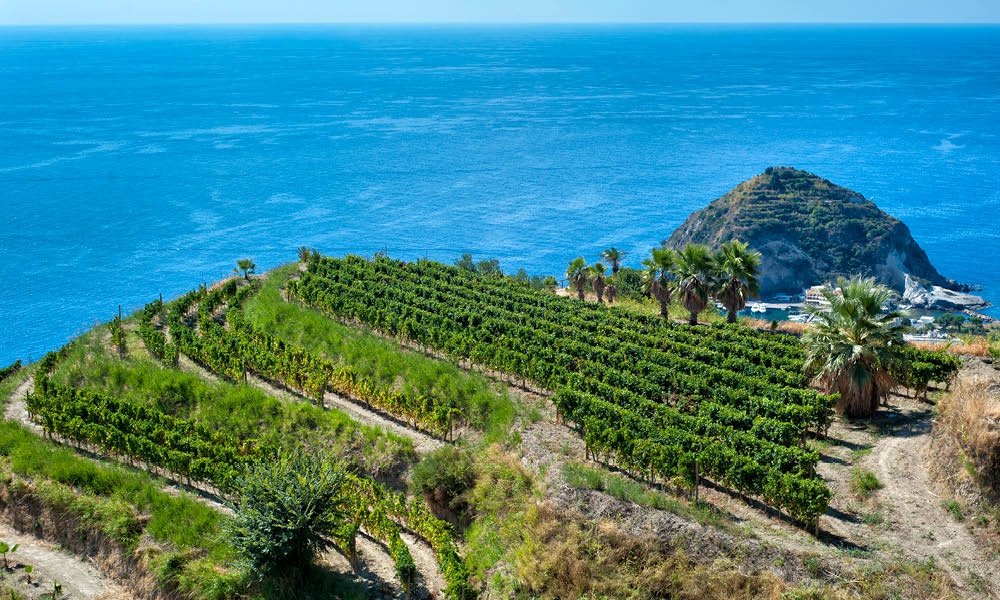
Terracing is also essential. Many vineyards are carved into steep slopes facing the sea, a landscape sometimes called the “green terraces of Ischia.” These terraces allow farmers to cultivate vines on terrain that would otherwise be impossible to farm.
The Origins of Casa D’Ambra
Casa D’Ambra’s story began in the late nineteenth century when the D’Ambra family started producing wine on the island. At the time, viticulture on Ischia was widespread but fragmented, with small growers selling wine locally.
The turning point came in the twentieth century when Angelo D’Ambra recognized the potential of Ischia’s native grape varieties and volcanic terroir. Instead of abandoning traditional cultivation methods, he focused on improving them and giving local wines a recognizable identity.
During the 1950s and 1960s, when tourism began transforming the island’s economy, Casa D’Ambra played a key role in promoting Ischia’s wines beyond local markets. Bottled wines from the island began reaching restaurants and wine shops across Italy.
More importantly, the winery helped document and preserve indigenous grape varieties that might otherwise have disappeared.
Native Grape Varieties of Ischia
Ischia’s wines are defined by a set of local grapes that thrive in volcanic soils.
Among the most important are Biancolella and Forastera, two white varieties that represent the core of the island’s wine production.
Biancolella is considered the most elegant expression of Ischia’s volcanic terroir. It produces wines that are fresh, mineral, and aromatic, often showing notes of citrus, Mediterranean herbs, and white flowers.
Forastera, whose name literally means “foreigner,” likely arrived on the island centuries ago from other Mediterranean regions. On Ischia, however, it adapted perfectly to volcanic soils and maritime exposure, producing structured wines with good acidity and subtle fruit aromas.
Casa D’Ambra helped define these grapes as the backbone of the island’s modern winemaking identity.
Viticulture on Steep Terraces
One of the most distinctive aspects of Ischia’s wine culture is the way vineyards are cultivated.
Much of the island’s viticulture takes place on narrow terraces supported by dry stone walls, often located hundreds of feet above sea level. Mechanization is almost impossible in these areas, meaning that most work in the vineyard must still be done by hand.
Harvesting grapes on these terraces can be physically demanding. Workers often carry baskets along steep paths connecting different vineyard levels. In some areas, small monorail systems help transport grapes down the slopes.
Casa D’Ambra has long supported the preservation of these terraces because they represent a crucial part of the island’s agricultural heritage.
Casa D’Ambra and the Modern Identity of Ischia’s Wines
While deeply rooted in tradition, Casa D’Ambra also played a central role in modernizing the island’s winemaking.
During the late twentieth century, the winery invested in improved cellar technology and controlled fermentation processes. These innovations helped highlight the freshness and mineral profile of volcanic wines while maintaining consistent quality.
At the same time, the winery continued to emphasize indigenous grape varieties rather than replacing them with international grapes. This approach anticipated a broader global movement toward terroir-driven wines.
Today, wines such as Biancolella d’Ischia DOC are considered among the most representative expressions of Campania’s coastal viticulture.
Wine and the Cultural Landscape of Ischia
Wine is deeply integrated into the landscape of Ischia. Terraced vineyards appear above fishing villages, coastal cliffs, and historic rural paths connecting inland farms with the sea.
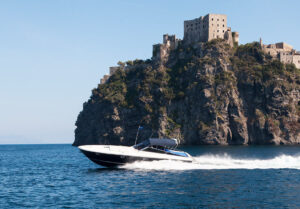
From the water, these vineyards form part of the scenery visible along the island’s coastline. Travelers exploring Ischia by boat — for example during a private boat tour around the island — can clearly see how agriculture has shaped the island’s geography for centuries.
Wine therefore becomes not only a product but also a visible cultural element of the island’s identity, just like the historic villages, thermal gardens, and natural landmarks that characterize Ischia. Wine is deeply integrated into the landscape of Ischia. Terraced vineyards appear above fishing villages, coastal cliffs, and historic rural paths connecting inland farms with the sea.
From the water, these vineyards form part of the scenery visible along the island’s coastline. Travelers exploring Ischia by boat can see how agriculture has shaped the island’s geography for centuries.
Wine therefore becomes not only a product but also a visible cultural element of the island’s identity.
Volcanic Wines and Mediterranean Cuisine
Ischia’s wines pair naturally with Mediterranean cuisine. Local gastronomy relies heavily on seafood, fresh vegetables, olive oil, and aromatic herbs.
Volcanic white wines like Biancolella and Forastera complement dishes such as grilled fish, seafood pasta, and coastal vegetable recipes. Their mineral structure and bright acidity balance the flavors typical of Mediterranean cooking.
This culinary connection reinforces the link between Ischia’s wines and the broader culture of the island.
Conclusion
Casa D’Ambra represents one of the most important chapters in the story of Ischia’s wine heritage. The winery helped transform a local agricultural tradition into a recognized expression of volcanic Mediterranean viticulture.
Through the preservation of indigenous grapes, the protection of terraced vineyards, and the promotion of terroir-driven wines, Casa D’Ambra contributed to defining the wine identity of Ischia.
For travelers interested in the cultural landscape of the island, these wines offer a direct connection to the volcanic soil and traditions that shaped Ischia long before tourism arrived. When exploring the island, wine culture often intersects with other experiences such as visiting historic sites like the Aragonese Castle or discovering the coastline from the sea during a private boat tour. Casa D’Ambra represents one of the most important chapters in the story of Ischia’s wine heritage. The winery helped transform a local agricultural tradition into a recognized expression of volcanic Mediterranean viticulture.
Through the preservation of indigenous grapes, the protection of terraced vineyards, and the promotion of terroir-driven wines, Casa D’Ambra contributed to defining the wine identity of Ischia.
For travelers interested in the cultural landscape of the island, these wines offer a direct connection to the volcanic soil and traditions that shaped Ischia long before tourism arrived.