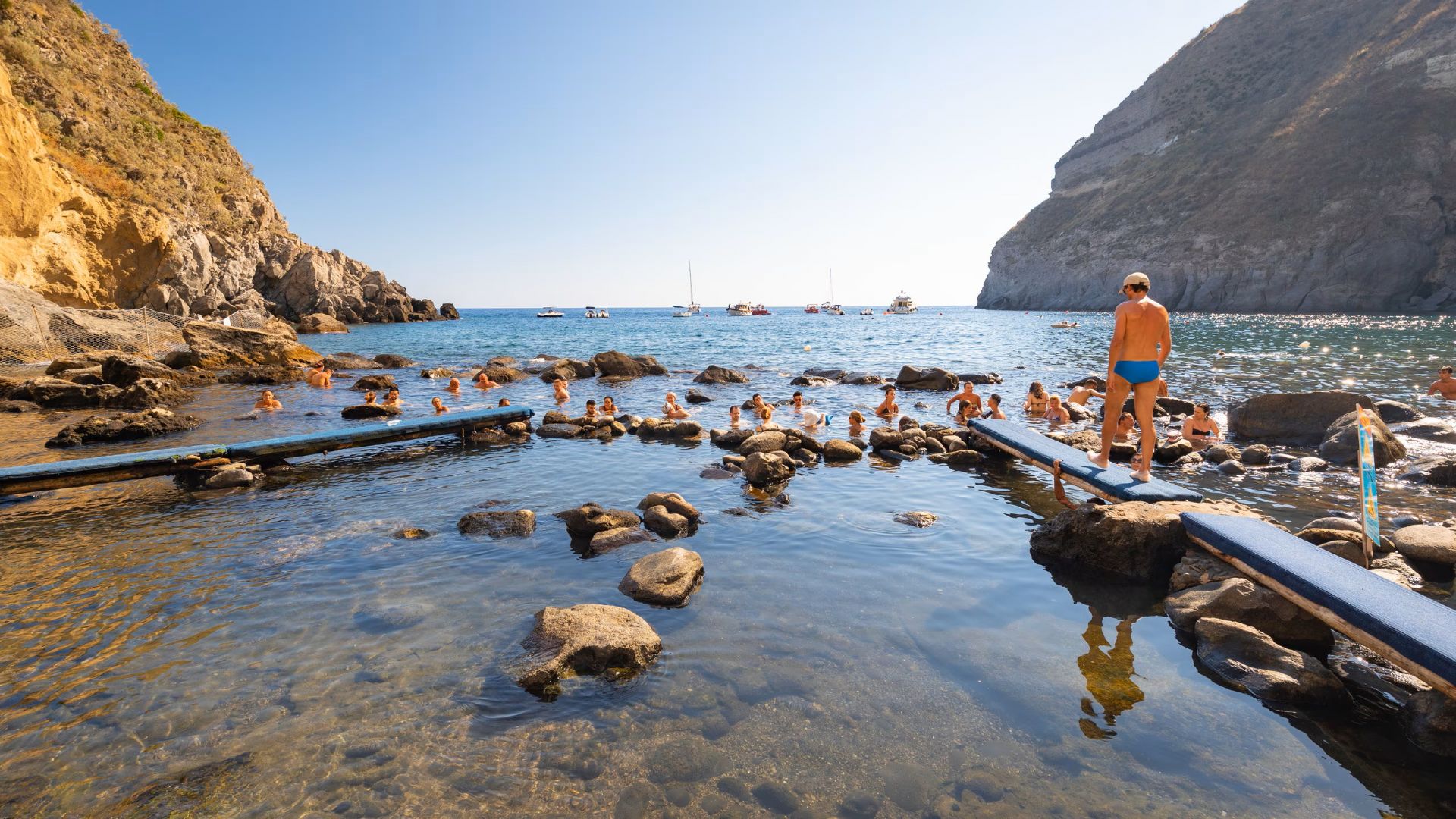
Ischia is often associated with thermal spas and historic gardens, but Sorgeto Bay represents a different dimension of the island’s geothermal identity. Located near the village of Panza, on the southern coast of Ischia, Sorgeto is a natural thermal basin where hot spring water emerges directly from the seabed, mixing with seawater and creating naturally heated pools.
Unlike traditional spa facilities, Sorgeto is not an artificial structure. It is the visible result of the island’s volcanic geology, which continues to influence the landscape, the water temperature, and the mineral composition of the bay.
The volcanic origin of Sorgeto Bay
Ischia is part of a volcanic complex linked to the Phlegraean Fields. Its geological structure is characterized by underground thermal reservoirs, fumaroles, and hydrothermal vents. Sorgeto is one of the most accessible and striking examples of this system.
Here, thermal water rises from fractures in the rock and flows directly into the sea. The temperature varies depending on the tides and the specific emergence point, often reaching high levels near the source and cooling gradually as it mixes with seawater.
The result is a dynamic environment where natural rock pools form between volcanic stones, creating areas of warm water even during colder months. This geothermal phenomenon makes Sorgeto one of the few places in the Mediterranean where it is possible to experience open-air thermal bathing directly in the sea.
A natural thermal experience by the sea
Sorgeto is accessible through a long staircase descending from the road above. The effort required to reach the bay contributes to preserving its relatively unspoiled character. There are no large beach clubs or extensive infrastructures; the landscape remains defined by volcanic rock formations and small stone platforms shaped by erosion.
The most distinctive feature of Sorgeto is the coexistence of hot and cold water in close proximity. Visitors can move between warmer pockets near the thermal springs and cooler seawater just a few steps away. This natural contrast enhances circulation and is traditionally associated with the therapeutic properties attributed to Ischia’s thermal waters.
Even in winter, steam can often be seen rising from the surface, emphasizing the geothermal activity beneath the seabed.
The mineral composition and thermal properties
The thermal waters of Ischia are known for their mineral richness, including bicarbonates, sulfates, sodium, and other elements associated with volcanic environments. While Sorgeto does not function as a regulated spa facility, the same geothermal system feeds many of the island’s renowned thermal parks and medical centers.
Historically, Ischia’s thermal resources have been used for therapeutic treatments related to skin conditions, respiratory issues, and musculoskeletal discomfort. Sorgeto represents the raw, natural expression of this hydrothermal system.
The continuous mixing with seawater also differentiates Sorgeto from inland thermal pools. The salinity and mineral content combine to create a unique bathing environment that reflects both volcanic and marine influences.
Sorgeto within Ischia’s volcanic landscape
Understanding Sorgeto requires a broader view of Ischia’s geology. The island’s shape, cliffs, and underground cavities were formed by eruptions, collapses, and subsequent hydrothermal activity. The last eruption, in 1302, reshaped parts of the island and contributed to the formation of lava flows that are still visible today.
Sorgeto’s rocky platforms and submerged vents are part of this geological narrative. The bay is not merely a scenic cove; it is an active expression of a dormant volcanic system that continues to release thermal energy.
Exploring Ischia from the sea allows a clearer perception of this volcanic morphology. The southern coastline, including Sorgeto, reveals steep cliffs, rock strata, and thermal manifestations that are less evident from inland roads.
Visiting Sorgeto by sea
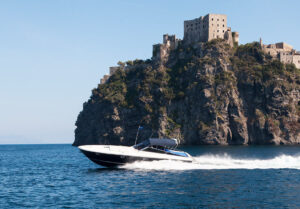
Reaching Sorgeto by boat offers a different perspective compared to accessing it from land. Approaching the bay from the water highlights the contrast between dark volcanic rock and the clear Mediterranean sea. It also allows visitors to observe how the coastline curves and encloses the thermal basin.
While direct access conditions depend on sea state and local regulations, navigating along this stretch of Ischia’s coast provides a comprehensive understanding of the island’s geothermal identity. Sorgeto can be integrated into a broader itinerary that includes the Aragonese Castle, the Maronti Beach area, and other volcanic landmarks.
Experiencing Sorgeto from offshore reinforces a key insight: Ischia is not only a leisure destination but a living geological system. The island’s thermal waters, landscapes, and coastal formations are interconnected elements shaped by volcanic activity over centuries.
Sorgeto Bay stands as one of the clearest examples of this natural process, where geothermal energy meets the Mediterranean in an environment that remains largely authentic and structurally unchanged.