Falanghina is one of the most ancient white grape varieties in southern Italy, deeply rooted in Campania’s volcanic soils and shaped by the same Mediterranean forces that define its coastline. More than a regional wine, Falanghina is an expression of landscape: sun, sea breezes, mineral-rich earth, and centuries of coastal life.
Its identity cannot be separated from geography. To understand Falanghina is to understand Campania itself, where vineyards often grow within sight of the sea and volcanic craters lie just inland from the shore.
Volcanic origins and mineral character
The defining trait of Falanghina is its volcanic origin. The grape thrives in soils formed by ancient eruptions, particularly around the Phlegraean Fields, Mount Vesuvius, and the inland volcanic plateaus of the Sannio area near Benevento. These soils are rich in ash, pumice, tuff, and mineral deposits that strongly influence the wine’s profile.
In the glass, this translates into a distinct mineral backbone. Falanghina typically shows crisp acidity, subtle saline notes, and a clean, linear structure. Aromas lean toward citrus, green apple, white flowers, and Mediterranean herbs, with a finish that often recalls wet stone or sea spray.
This mineral tension is not an abstract tasting note; it is the direct result of volcanic terrain interacting with a coastal climate.
The role of the Mediterranean coast
Proximity to the sea plays a crucial role in shaping Falanghina’s freshness and balance. Vineyards benefit from constant air circulation, which moderates temperatures during the hottest months and preserves acidity in the grapes. Day to night temperature variations, enhanced by sea breezes, help maintain aromatic precision and elegance.
The Mediterranean climate allows Falanghina to ripen fully without becoming heavy. Even in warmer vintages, the wine retains vibrancy, making it particularly suited to coastal cuisine and summer consumption.
This natural harmony between grape and environment explains why Falanghina feels inseparable from the Campanian coast. It is not a wine adapted to the sea; it is a wine born of it.
A historical wine tied to coastal civilizations
Falanghina’s history predates modern Italy. Its name is believed to derive from the Latin falangae, the wooden stakes used by the Romans to support vines, a method still known locally as the “Puteolano system” after the ancient name of Pozzuoli. Roman authors described wines produced in this area as prized exports, shipped across the Mediterranean from ports along the Campanian coast.
For centuries, Falanghina was cultivated close to trade routes, fishing villages, and coastal settlements. Wine was part of daily life, consumed alongside seafood, bread, olive oil, and seasonal vegetables. This historical continuity reinforces its identity as a coastal wine, meant to accompany simple, fresh dishes rather than overpower them. Remarkably, in the volcanic soils of the Phlegraean coast the vines were never affected by phylloxera, and many old plants are still cultivated today on their original ungrafted rootstocks, a rarity in the European wine landscape.
Falanghina and coastal food pairing
Falanghina’s structure makes it one of the most versatile white wines in southern Italy. Its acidity and mineral notes pair naturally with Mediterranean coastal cuisine. It works particularly well with raw or lightly cooked seafood, grilled fish and shellfish, lemon-based pasta dishes, fresh cheeses and vegetables, and simple dishes that highlight olive oil and herbs. The wine enhances flavors without masking them, mirroring the understated elegance of coastal cooking.
Where Falanghina actually grows: the Phlegraean coast and beyond
Although Falanghina is often described as a wine of all Campania, its most distinctive expressions come from a handful of very specific places, all within easy reach of the sea.
The heart of coastal Falanghina is the Campi Flegrei DOC, the appellation that covers the volcanic territory west of Naples. The denomination includes the towns of Pozzuoli, Bacoli, Monte di Procida, Quarto, and, importantly, the entire island of Procida. Within this area, the bottling labeled “Campi Flegrei Falanghina” must be made from at least 90% Falanghina grapes, and the wines are typically marked by sharp salinity, white-flower aromatics, and a vivid mineral finish that reflects the surrounding volcanic geology.
Falanghina also plays a structural role in the Capri Bianco DOC, where it contributes freshness and minerality to the white blend produced on the island. On Ischia, although the local DOC is dominated by autochthonous varieties such as Forastera and Biancolella, Falanghina is grown across the wider Bay of Naples wine landscape and remains part of the broader volcanic-island wine identity that defines the gulf.
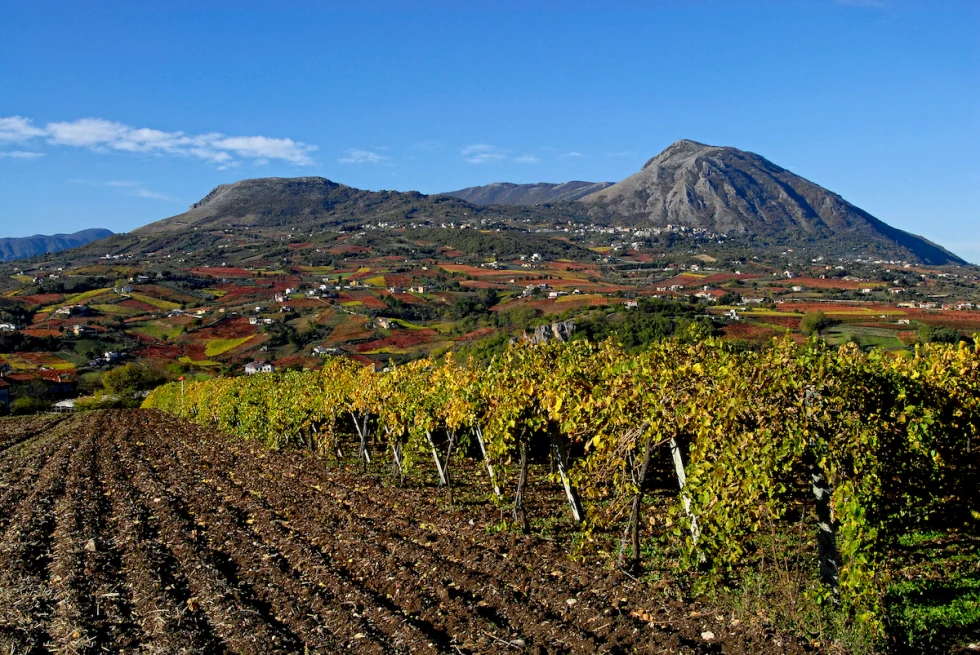
Inland, in the hills of the Sannio around Benevento, Falanghina expresses a different character: more structured, slightly broader, with riper fruit and lower salinity. The two faces of Falanghina, the Phlegraean and the Sannio, are recognized as distinct expressions of the same grape, and tasting them side by side is a useful way to understand how Campanian terroir works.
How to experience Falanghina by the sea
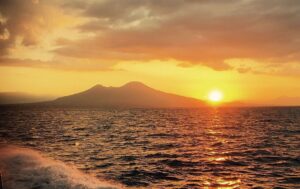
The most natural place to taste Falanghina is exactly where it grows: along the Bay of Naples, with the volcanic islands and the Phlegraean coast in view. Traveling by private boat through this part of the gulf brings the geography of the wine into focus in a way that no tasting room can replicate.
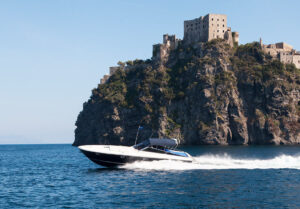
A private boat tour to Ischia and Procida passes directly along the coastline of the Campi Flegrei DOC. From the water you see the same slopes where the vines are grown on their original ungrafted roots, and a glass of cold Campi Flegrei Falanghina enjoyed on board, ideally paired with a light seafood lunch, becomes an expression of the landscape itself rather than just a refreshment.
For travelers focused on Capri, a private boat tour around Capri Island offers a different angle on the same idea. The island’s small but historic Capri Bianco DOC, in which Falanghina plays a defining role, is poured in the restaurants and beach clubs reachable by boat, and the volcanic, marine character of the wine resonates with the geography seen from the sea.
Combining a boat day with a Falanghina-focused lunch or aperitivo is one of the most coherent ways to introduce the wine to a traveler who has only encountered it on a wine list before. The grape, the rocks, and the water belong to the same story.
A wine that reflects the coast from the sea
Experiencing Falanghina while moving along the Campanian coastline adds another layer of meaning. From the water, the connection becomes visual as well as sensory: vineyards rising from volcanic slopes, fishing towns clustered around harbors, and the constant presence of the sea shaping everything in between.
This is why Falanghina often feels like more than a drink. It becomes part of the coastal experience itself, a liquid narrative of land, sea, and time.
In Campania, wine is not an isolated product. It is a reflection of place. Falanghina, with its volcanic soul and Mediterranean freshness, remains one of the clearest expressions of that bond between earth and coast. If you would like to include a Falanghina tasting along the Phlegraean coast, around Procida, or near Capri as part of your itinerary, you can request a tailored quote and we will help shape the right route, timing, and pairing around your day on the water.