
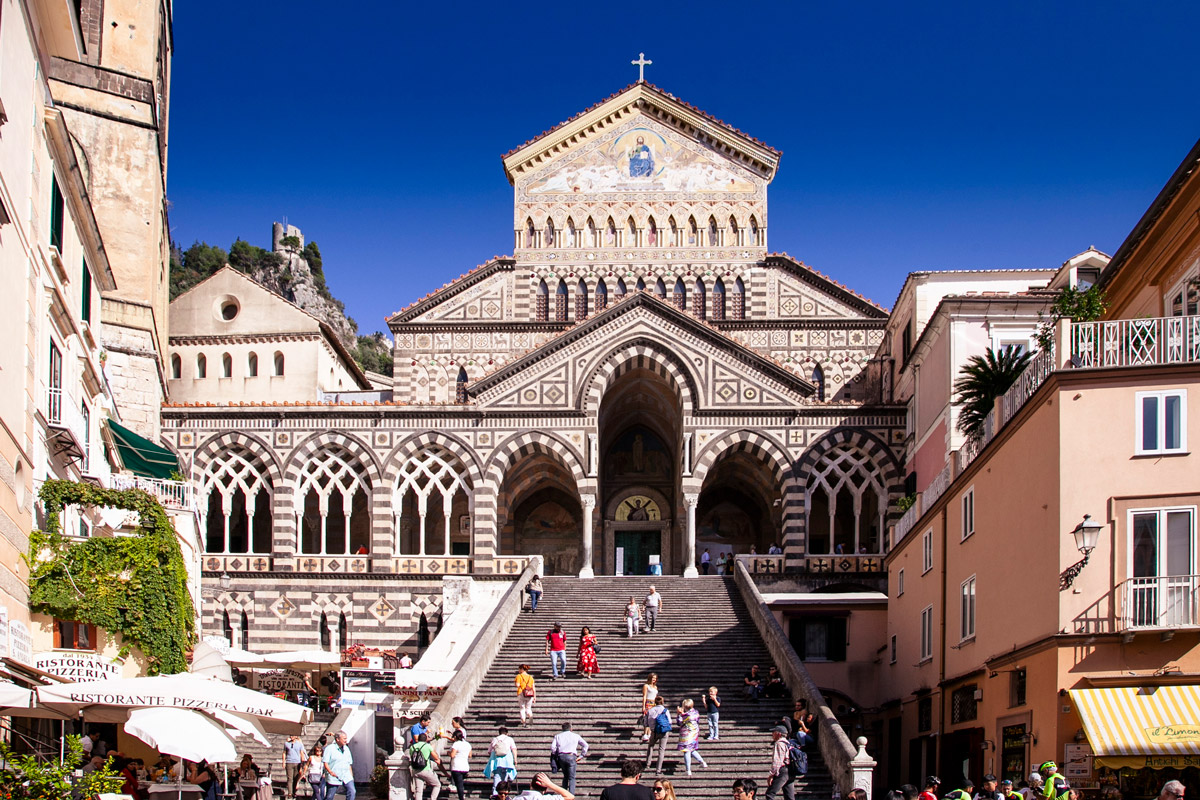
Long before Italy became a unified nation, the sea was already defining its destiny. Between the Middle Ages and the early Renaissance, a handful of coastal cities rose to power thanks to trade, navigation, and maritime skill. These cities became known as the Maritime Republics of Italy, and their legacy can still be felt today while sailing along the Italian coast.
Understanding their story adds a deeper layer to any journey by sea, especially when exploring places like the Amalfi Coast, Naples, and the wider Mediterranean.
What Were the Maritime Republics?
The Maritime Republics were independent city-states that dominated Mediterranean trade between the 9th and 13th centuries. The most famous were Amalfi, Venice, Genoa, and Pisa, each building wealth and influence through shipping, naval power, and international commerce.
These cities were not only ports — they were gateways between cultures. Merchants sailed regularly to North Africa, the Middle East, and Byzantium, transporting spices, silk, precious metals, and ideas. The sea was their road, their defense, and their source of prosperity.
Amalfi: A Maritime Power Before Its Time
Among the Maritime Republics, Amalfi holds a special place in Southern Italy. Long before Venice rose to prominence, Amalfi was already a major naval and commercial power. Its sailors developed advanced maritime laws, known as the Tavole Amalfitane, which regulated navigation and trade across the Mediterranean for centuries.
Today, Amalfi may appear as a quiet coastal town, but from the sea its historical importance becomes clearer. The steep cliffs, natural harbors, and strategic position explain why this stretch of coastline was once a hub of maritime innovation and wealth.
From Trading Routes to Travel Routes
The same sea routes once used by medieval merchants are now followed by travelers exploring the coast by boat. Sailing between Capri, Amalfi, Positano, and Naples, it’s easy to imagine ships arriving with exotic goods, foreign languages echoing in the ports, and cultures meeting on the docks.
Modern boat tours recreate this sense of movement and discovery — not for trade, but for experience. Cruising along the coast allows visitors to understand why the sea was so central to daily life, defense, and prosperity.
Curiosities from the Age of the Sea
-
Amalfi sailors were among the first to use the magnetic compass in Mediterranean navigation
-
Maritime Republics minted their own coins, accepted across Europe
-
Sea power determined political influence more than land armies
-
Ports were melting pots of religions, languages, and traditions
These details transform a simple coastal view into a living historical landscape.
Experiencing History from the Water
Exploring the coast by boat today is not just a scenic choice — it is a historical one. The perspective from the sea reveals why these cities flourished, how geography shaped their destiny, and why the Mediterranean has always been a bridge rather than a barrier.
Whether cruising along the Amalfi Coast, circling Capri, or navigating the Bay of Naples, the journey echoes centuries of maritime history. The sea that once carried merchants and explorers now carries travelers seeking beauty, culture, and connection.
A Sea That Still Tells Stories
The legacy of the Maritime Republics lives on in architecture, traditions, and coastal towns — but most of all, it lives in the sea itself. Every voyage along the Italian coast is part of a story that began long before modern tourism, when ships ruled the Mediterranean and the horizon promised opportunity.
Traveling by boat today is a way to reconnect with that heritage, experiencing Italy not just as a destination, but as a maritime civilization shaped by wind, water, and time.
